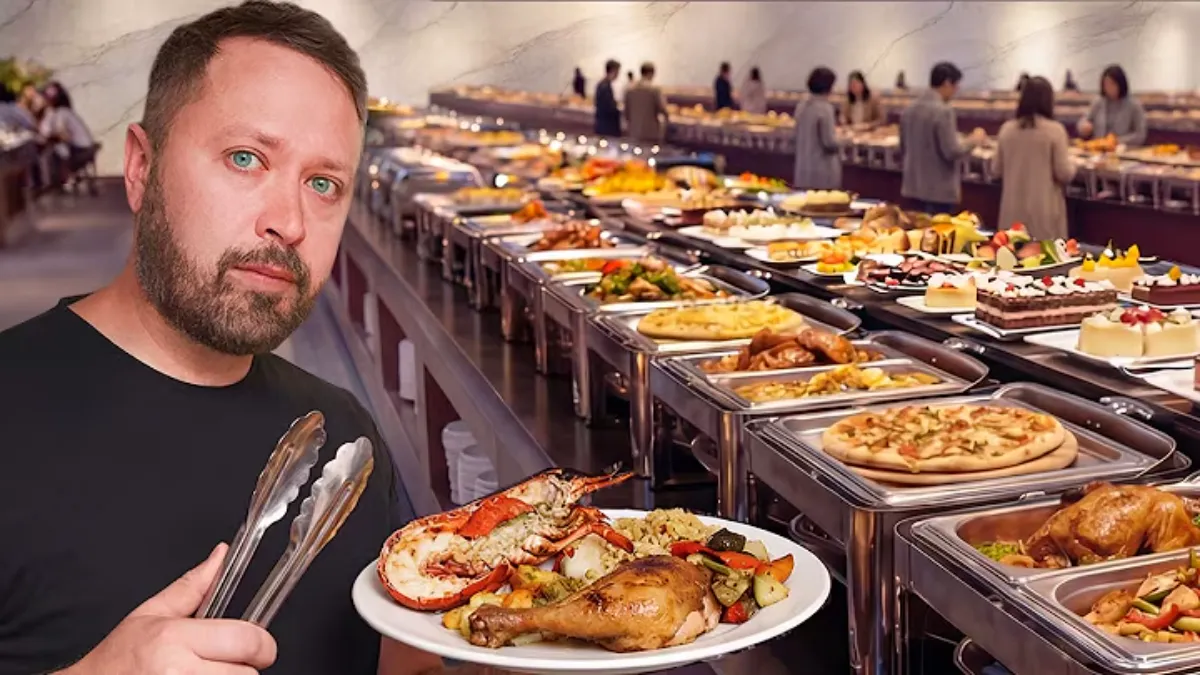

America’s Biggest Buffet Chain America’s all-you-can-eat dining trend is gaining attention as customers look for filling meals at affordable prices. But serving unlimited food at a fixed price is not as simple as it sounds. Rising beef prices, higher operating expenses, labor costs, and food waste can quickly eat into restaurant profits.
Golden Corral, one of America’s largest buffet chains, has developed a strategy to keep its all-you-can-eat business running while working to control these expenses. The company combines menu planning, careful food preparation, customer demand data, and additional beverage sales to make the buffet model more sustainable. A recent report highlighted how the chain manages the economics behind its large food selection. <Cite refs={[“turn217629search0″,”turn217629search1”]}/>
Golden Corral’s Strategy Behind the Buffet Business
Golden Corral operates roughly 350 restaurants across the United States and offers a wide variety of dishes. Its buffet typically features around 150 items, including meat, seafood, vegetables, potatoes, rice, and other popular comfort foods.
The challenge is balancing customer satisfaction with the cost of every dish. Customers expect plenty of choices, but the restaurant must ensure that the total cost of the food served remains manageable.
Instead of treating every buffet item as a separate expense, the company organizes dishes into combinations, bringing higher-cost foods together with more affordable options. This approach allows guests to enjoy variety while helping the business manage its overall food costs. <Cite refs={[“turn217629search0″,”turn217629search1”]}/>
Why Golden Corral Pairs Expensive Foods With Cheaper Options
One of the company’s key strategies is menu design. Items such as shrimp and sirloin generally cost more than potatoes, rice, fries, and other side dishes.
By offering these foods together, Golden Corral creates a varied dining experience without relying entirely on expensive ingredients. For example, meatloaf can be served alongside potatoes, gravy, and green beans, while shrimp may appear near more affordable sides.
This strategy does not require the restaurant to hide its premium dishes. Instead, it balances the buffet as a whole, making it possible to offer a broad selection at a price customers may find attractive.
Rising Beef Prices Push the Chain Toward Pork
Higher beef prices have created another challenge for buffet operators. Sirloin can be an expensive menu item, particularly when customers are allowed to return for additional servings.
Golden Corral has responded by introducing a bone-in fried pork chop as an alternative protein. According to reporting by Fox News, the pork chop costs the chain about 40% as much as its sirloin.
That difference gives the restaurant another way to offer a satisfying meat option while reducing pressure on its food budget. Customers still have choices, and the business can encourage a more balanced mix of orders without removing sirloin from the menu. <Cite refs={[“turn217629search0″,”turn217629search1”]}/>
Fresh Food Helps Reduce Waste
Food quality is especially important in an all-you-can-eat restaurant. When a dish is poorly prepared or loses its freshness, customers may leave it uneaten and choose something else. That creates additional waste and increases costs.
Golden Corral uses customer-demand information to estimate how much food its restaurants will need. Rather than preparing everything in large quantities well in advance, staff can plan production in intervals as short as 15 minutes.
The company also prepares approximately 80% of its buffet items in-house, according to the reporting. This approach helps restaurants maintain freshness while limiting the amount of food left over at the end of a service period. <Cite refs={[“turn217629search0″,”turn217629search1”]}/>
How Much Does Food Cost the Business?
Food represents a major expense for any buffet restaurant because the price paid by a customer does not change with every additional serving.
Reported figures indicate that food costs account for approximately 38 cents of every dollar Golden Corral earns in sales. The company has also been working to keep its dinner buffet below $20 at many locations, although prices and offerings can vary by restaurant.
That leaves the business needing to cover wages, rent, utilities, transportation, maintenance, and other operating expenses from the remaining revenue.
| Business factor | Why it matters |
|---|---|
| Food costs | Determines how much revenue remains after ingredients are purchased |
| Menu planning | Balances expensive proteins with lower-cost dishes |
| Demand forecasting | Helps prevent overproduction and food waste |
| Self-service | Reduces the need for traditional table service |
| Beverage sales | Creates additional revenue beyond the buffet price |
| Customer traffic | Helps spread fixed operating costs across more diners |
These figures and strategies illustrate why a buffet needs more than a popular menu to remain profitable. It also needs disciplined day-to-day management. <Cite refs={[“turn217629search0″,”turn217629search1”]}/>
Beverage Sales Provide an Additional Revenue Stream
Food is only one part of the business model. Drinks can also contribute to restaurant revenue because beverages are often sold separately from the buffet meal.
Reporting on Golden Corral indicates that its refillable beverages sell for around $3.20. When customers purchase drinks in addition to their meals, the restaurant earns revenue beyond the fixed buffet price.
This does not mean every drink produces the same profit, since ingredients, supplies, and other expenses still apply. However, beverage sales can help support the business while customers enjoy their meals.
Why Customer Traffic Is So Important
A buffet depends on a steady flow of diners. Restaurants must pay many expenses even when customer numbers fall, including rent, utilities, and certain staffing costs.
Golden Corral’s business model therefore relies on attracting enough customers to keep its dining rooms busy. A decline in weekly visits can put pressure on a restaurant’s finances, even if the menu and prices remain unchanged.
Self-service also helps control labor expenses compared with a traditional restaurant that relies heavily on servers to deliver every dish. Nevertheless, buffet operations still require employees to cook, clean, replenish food, and maintain safety standards.
Other Restaurant Chains Are Embracing Unlimited Deals
Golden Corral is not the only company trying to attract diners with unlimited food offers. Other major restaurant brands have also experimented with promotions that promise repeat servings of selected menu items.
Examples include Olive Garden’s Never-Ending Pasta Bowl, Applebee’s unlimited promotions, and Red Lobster’s returning unlimited shrimp offers. These deals appeal to customers who want predictable pricing and the option to enjoy additional servings.
Industry figures cited in recent reporting show that major restaurant chains introduced around 150 all-you-can-eat promotions during the first half of 2026, roughly four times the number recorded in 2021. <Cite refs={[“turn217629search0″,”turn217629search1”]}/>
However, unlimited promotions can be risky. If ingredient prices rise or customers consume more expensive items than expected, a restaurant can struggle to make the numbers work. Successful promotions require careful pricing, portion planning, and operational control.
Can the All-You-Can-Eat Model Remain Profitable?
Golden Corral’s approach shows that unlimited dining can work when restaurants pay close attention to their costs. The company combines a broad menu with lower-cost alternatives, production planning, self-service, and additional beverage revenue.
Still, the model faces continuing pressure from food inflation, fuel surcharges, and other operating expenses. Restaurants cannot rely on raising prices indefinitely without risking customer dissatisfaction.
For Golden Corral, the challenge is to preserve the value customers expect while ensuring that each location operates efficiently. Fresh food, consistent quality, sensible purchasing, and strong customer traffic will remain essential to that goal.
Frequently Asked Questions (FAQs)
1. What is America’s biggest buffet chain?
Golden Corral is widely described in recent reporting as America’s largest buffet chain, with roughly 350 restaurants in the United States.
2. How does Golden Corral control food costs?
The chain balances expensive items with affordable side dishes, uses demand data to plan food preparation, and offers alternatives such as bone-in pork chops.
3. Why are pork chops important to the strategy?
According to reporting, Golden Corral’s bone-in pork chop costs about 40% as much as its sirloin, giving the restaurant a lower-cost protein option.
4. How does an all-you-can-eat restaurant earn extra revenue?
In addition to buffet sales, restaurants may earn revenue from separately priced beverages and other menu offers.
SEO Keywords: Golden Corral, America’s biggest buffet chain, all-you-can-eat profits, buffet restaurant business model, Golden Corral food costs, unlimited dining deals, restaurant industry trends 2026.
SEO Meta Description: Discover how Golden Corral manages rising food costs, reduces buffet waste, balances expensive menu items, and works to make all-you-can-eat dining profitable.

Read More