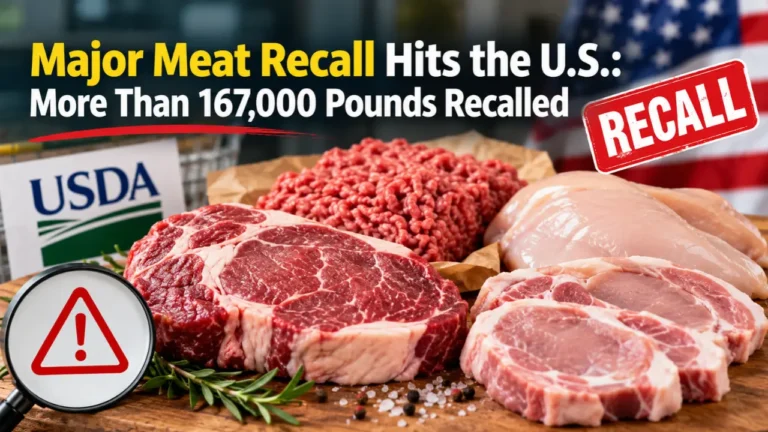

Major Meat Recall A major food safety alert is drawing attention across the United States after 167,639 pounds of raw beef, pork and goat meat were recalled over concerns that the products were produced without the required federal inspection. The U.S. Department of Agriculture’s Food Safety and Inspection Service (USDA-FSIS) announced the recall involving Star Meat Delivery Inc., a meat company based in Lucama, North Carolina.
The recalled products reportedly carried a false USDA inspection mark displaying establishment number “EST. 1363.” According to federal officials, this establishment number did not have an approved federal grant of inspection.
The products were distributed through A&D Foods, a Georgia-based distributor, to retail stores and restaurants across the country. Consumers are being urged to check their meat purchases carefully and avoid eating any products covered by the recall.
No confirmed illnesses or injuries had been reported in the initial recall announcement. However, the USDA warned that meat produced without the required inspection may contain harmful bacteria, undeclared allergens or other contaminants.
Why Was More Than 167,000 Pounds of Meat Recalled?
The recall was announced on September 22, 2026, after the USDA identified raw meat products that had been produced without the benefit of required federal inspection.
The products carried labels with a USDA inspection mark displaying the establishment number “EST. 1363.” Federal officials said the number did not have an authorized federal inspection grant.
Meat inspection is an important part of the U.S. food safety system. It helps ensure that regulated meat products meet applicable inspection, safety and labeling requirements before reaching consumers.
Because the recalled products had not undergone the required federal inspection, the USDA classified them as misbranded and unsafe to eat.
The problem was discovered during routine food safety surveillance. The products were produced on various dates before September 22, 2026, and shipped for further distribution.
Which Meat Products Are Included in the Recall?
The recall covers multiple varieties of raw beef, pork and goat products distributed in bulk under the A&D Foods label.
Affected products include:
- Beef: Sliced ribeye, beef chuck, beef oxtail, beef short ribs, beef feet and bone-in shanks.
- Pork: Ground pork, pork chorizo, pork chops, pork feet, pork ribs and pork hocks.
- Boston butt products: Diced, sliced and thinly sliced pork cuts.
- Goat meat: Goat cuts and skin-on goat products.
- Other products: Menudo mix and additional listed beef and pork cuts.
The products were vacuum-sealed and packed in cardboard boxes for shipment. Individual packages may have different labels because some retailers apply their own pricing and safe-handling stickers.
The list above is not exhaustive. Consumers and food businesses should check the USDA’s full recall notice and product-label images to identify all affected items.
What Does the “EST. 1363” Inspection Mark Mean?
One of the most important details in this recall is the establishment number printed on the affected product labels.
The USDA identified “EST. 1363” as a false inspection number that did not have a federal grant of inspection.
Consumers should understand that an inspection mark is not simply a decorative label. It identifies an establishment authorized under the relevant federal inspection system.
However, checking a retail package may be difficult because stores sometimes remove bulk packaging or add their own labels. The USDA has warned that some individual packages may not display the original shipping-box label.
If you recently purchased bulk meat and are unsure whether it is affected, contact the retailer or restaurant supplier and ask them to verify the product against the recall information.
Where Was the Recalled Meat Distributed?
The affected meat was shipped to A&D Foods, a distributor based in Georgia, for further distribution to retailers and restaurants nationwide.
That means the recall is not limited to North Carolina or Georgia. Products may have reached businesses and consumers in multiple states.
The USDA is concerned that some affected meat may still be stored in household refrigerators and freezers, restaurant kitchens or retail storage areas.
Retailers and restaurants have been instructed not to sell or serve the recalled products. Consumers who believe they purchased affected meat should check their supplies and follow the official recall instructions.
What Are the Potential Health Risks?
The central concern is that the meat was produced without the required federal inspection. The absence of that inspection means consumers cannot rely on the usual inspection process to establish that the products meet applicable requirements.
According to the USDA, food produced without inspection may contain:
- Harmful bacteria that can cause foodborne illness.
- Undeclared allergens that may pose a risk to people with food allergies.
- Other contaminants that could threaten consumer health.
- Unidentified safety or labeling problems that may not have been detected through the required process.
This does not mean every package is contaminated. However, the USDA has advised consumers to treat affected products as unsafe.
The agency reported no confirmed illnesses or injuries associated with the recalled meat in its initial announcement. Anyone who is concerned about symptoms after eating potentially affected meat should contact a healthcare professional. <Cite refs={[“turn193405search1″,”turn193405search3”]}/>
What Should Consumers Do If They Bought the Recalled Meat?
If you think you may have purchased one of the affected products, take the following precautions.
1. Do not eat the meat.
Do not taste it to determine whether it is safe. Products covered by the recall should not be consumed, even if they look and smell normal.
2. Check the product information.
Review any original packaging, shipping-box labels or purchase records. Look for the establishment number “EST. 1363” and compare the product details with the official recall notice.
3. Throw it away or return it.
The USDA advises consumers to discard the affected products or return them to the place of purchase.
4. Clean areas that may have contacted raw meat.
Wash your hands and clean and sanitize refrigerator shelves, containers, countertops and other surfaces that may have come into contact with raw meat or its juices.
5. Contact the retailer if you are unsure.
Because individual packages may not carry the original label, ask the store or supplier to help determine whether your purchase is affected.
6. Seek medical advice if necessary.
If you develop symptoms or are worried about a possible exposure, contact a healthcare professional.
Why Cooking Is Not a Reason to Ignore the Recall
Cooking raw meat to the appropriate internal temperature is an important food safety practice, but consumers should not attempt to make recalled meat safe by cooking it.
The USDA has advised consumers not to eat the affected products. The recall concerns meat produced without the required inspection, and potential hazards may not be obvious from appearance, smell or taste.
The safest approach is to follow the recall instructions and discard or return affected products.
What Has the Company Said About the Recall?
Star Meat Delivery Inc. has disputed the characterization that it deliberately used a fake USDA inspection stamp. According to statements reported by news organizations, the company said the meat came from a USDA-inspected supplier and that the establishment number had been reserved during an application process for approval to perform additional cutting and packaging services.
The company’s position differs from the USDA’s official recall findings. Federal officials stated that the products were produced without the required inspection and carried a false inspection mark associated with an establishment number that did not have a federal inspection grant.
The recall was announced after the issue was identified during routine USDA surveillance activities.
Why Food Recalls Matter for American Consumers
Food recalls are an important part of protecting public health. When officials identify a potential problem with food products, a recall helps prevent additional exposure and allows retailers, restaurants and consumers to remove affected items from circulation.
For meat products, inspection marks and establishment information can help identify products covered by a recall. However, consumers should not rely only on packaging because meat may be repackaged or relabeled before it reaches the final buyer.
Checking food safety announcements, keeping purchase records when possible and following official recall instructions can help households make informed decisions.
Final Thoughts
The recall of 167,639 pounds of raw beef, pork and goat meat is a significant food safety alert for consumers and food businesses across the United States. The USDA says the affected products were produced without the required federal inspection and carried a false inspection mark displaying “EST. 1363.”
Although no confirmed illnesses or injuries were reported in the initial announcement, consumers should not eat the affected meat. Anyone who purchased products that may be included in the recall should check the official product information, contact the retailer if necessary, and discard or return the meat according to USDA guidance.
Staying informed about food recalls can help protect families, restaurants and communities from avoidable food safety risks.
1. How much meat was recalled in the United States?
Approximately 167,639 pounds of raw beef, pork and goat products were recalled.
2. Which company recalled the meat?
The recall involves Star Meat Delivery Inc., based in Lucama, North Carolina.
3. Why was the meat recalled?
The products were produced without the required federal inspection and carried a false USDA inspection mark displaying establishment number “EST. 1363.”
4. Which types of meat are affected?
The recall includes various raw beef, pork and goat products, including ribeye, beef oxtail, short ribs, ground pork, pork chorizo, pork chops and goat cuts.
5. Were any illnesses reported?
The USDA reported no confirmed illnesses or injuries associated with the recalled products in its initial announcement.
6. What should I do if I have recalled meat in my refrigerator?
Do not eat it. Follow the USDA’s guidance to discard it or return it to the place of purchase.
7. Could the recalled products be sold outside North Carolina?
Yes. The products were distributed through a Georgia-based distributor to retailers and restaurants nationwide.
8. Where can I find the full list of recalled meat products?
Consumers should consult the USDA Food Safety and Inspection Service’s official recall announcement for the complete product list and available label images.

Read More