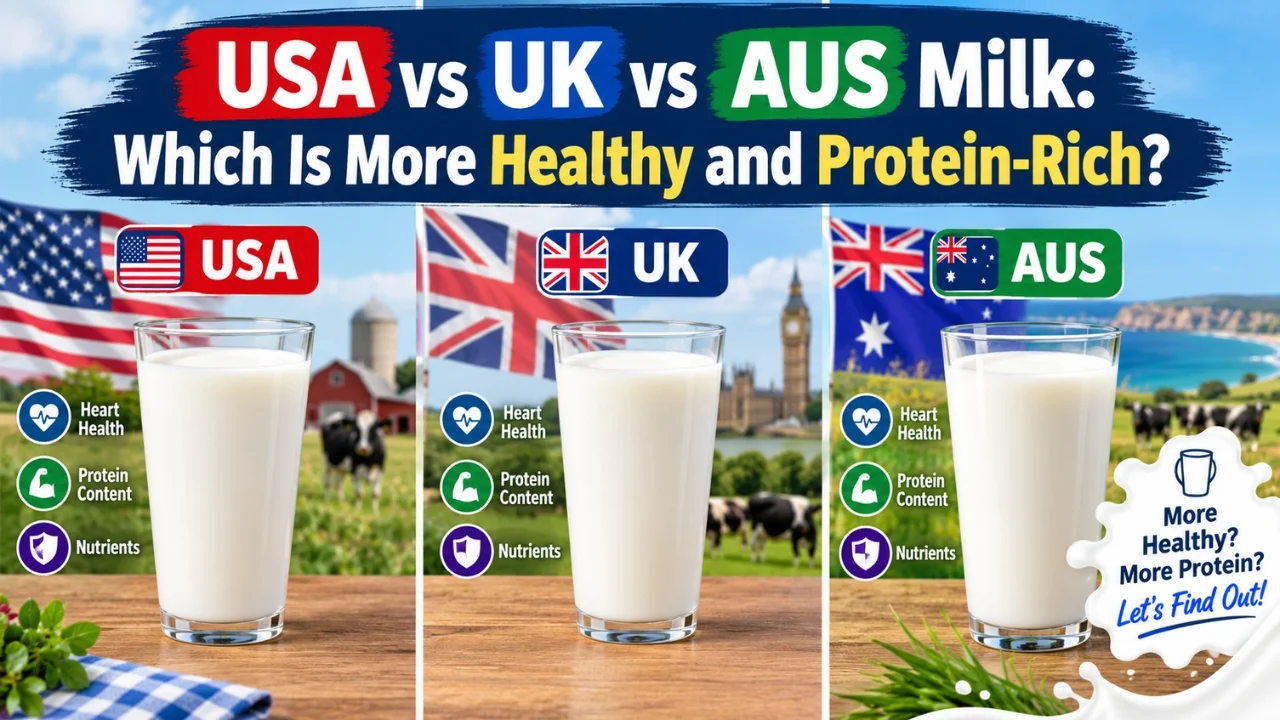

USA vs UK vs AUS Milk : Milk is a popular source of protein, calcium and essential nutrients around the world. However, milk sold in the United States (USA), the United Kingdom (UK) and Australia (AUS) can differ in fat content, vitamin fortification, processing methods and serving sizes. So, which country’s milk is healthier, and which one provides more protein?
The answer may surprise you: regular cow’s milk from all three countries has a very similar nutritional profile. The biggest differences often come from the type of milk you choose, how much you drink and whether additional nutrients, such as vitamin D, are added.
USA vs UK vs AUS Milk: Nutritional Comparison
Regular cow’s milk provides high-quality protein containing all nine essential amino acids. It also supplies calcium, vitamin B12 and other nutrients that support normal body functions.
Here is a general comparison of typical whole milk varieties.
| Feature | USA Milk | UK Milk | Australian Milk |
|---|---|---|---|
| Protein per 100 ml | Around 3.2–3.4 g | Around 3.5 g | Around 3.2–3.5 g |
| Fat content | Commonly around 3.25% | Commonly around 3.5% | Commonly around 3.3–3.5% |
| Calcium | Naturally present | Naturally present | Naturally present |
| Vitamin D | Often fortified | Depends on product | Depends on product |
| Common varieties | Whole, 2%, 1%, skim | Whole, semi-skimmed, skimmed | Full-cream, reduced-fat, skim |
| Protein quality | Complete protein | Complete protein | Complete protein |
Values are approximate and vary by brand and product. Always check the nutrition label for an accurate comparison.
Which Country’s Milk Has the Most Protein?
When comparing USA, UK and Australian milk, the protein difference is generally very small.
A typical 240 ml cup of US whole milk provides approximately 8 grams of protein. A 200 ml glass of UK whole milk provides around 7 grams, while a 250 ml serving of Australian full-cream milk may provide approximately 8–9 grams.
These serving sizes are different, which can make one country’s milk appear more protein-rich than another’s.
To make a fair comparison, look at protein per 100 ml rather than the amount listed for an entire glass.
Why Milk Protein Matters
Milk contains two major protein groups: casein and whey. Both provide essential amino acids that help the body maintain and repair tissues, including muscles.
For people who exercise regularly, milk can be a convenient way to add protein to meals and snacks. However, choosing milk based on its country of origin is generally unnecessary when ordinary cow’s milk products have similar protein levels.
Which Milk Is Healthier: USA, UK or Australia?
There is no single winner for everyone. The healthiest option depends on your nutritional needs, preferences and the product’s composition.
1. USA Milk
US milk is available in several fat levels, including whole milk, 2% reduced-fat milk, 1% low-fat milk and skim milk.
One important consideration is vitamin D fortification. Vitamin D is commonly added to milk in the United States, although consumers should still check the product label.
Best for: People looking for a wide selection of milk varieties and products with added vitamin D.
2. UK Milk
UK milk is commonly sold as whole, semi-skimmed and skimmed milk. These varieties contain broadly similar amounts of protein, while their fat and calorie levels differ.
For example, typical UK whole milk contains around 3.5 grams of protein per 100 ml. Semi-skimmed and skimmed varieties can provide slightly more protein per 100 ml, mainly because they contain less fat.
Best for: People who want to choose between full-fat and reduced-fat options while maintaining a similar protein intake.
3. Australian Milk
Australian milk is widely available in full-cream, reduced-fat and skim varieties. Full-cream milk commonly contains around 3.3–3.5% fat, with protein levels broadly comparable to those of milk sold in the USA and UK.
Australian milk may appear to provide more protein per serving when the label uses a 250 ml serving rather than a smaller glass.
Best for: People who want familiar dairy milk varieties and access to local Australian dairy products.
Whole Milk vs Low-Fat Milk: Which Is Better?
The amount of fat in milk makes a bigger difference to calories than to protein.
| Milk Type | Protein | Calories | Fat |
|---|---|---|---|
| Whole milk | Around 3.2–3.5 g per 100 ml | Higher | Higher |
| Reduced-fat milk | Around 3.3–3.6 g per 100 ml | Moderate | Moderate |
| Skim milk | Around 3.4–3.6 g per 100 ml | Lower | Very low |
Figures are approximate and depend on the product.
If you want to reduce your calorie or saturated fat intake, low-fat or skim milk may be a useful choice. If you prefer the richer taste of whole milk, it can also fit into a balanced diet, depending on your overall nutritional needs.
Importantly, removing fat from milk does not remove most of its protein.
Which Milk Is Best for Muscle Growth?
For muscle maintenance and recovery, regular cow’s milk from the USA, UK or Australia can all be suitable choices.
Milk provides complete protein, including leucine, an essential amino acid involved in muscle protein synthesis. The total amount of protein you consume throughout the day, combined with appropriate resistance exercise and recovery, is more important than the country where the milk was produced.
If you want more protein without drinking a larger volume, you can also look for filtered or specially formulated high-protein milk. Compare the nutrition label because these products may differ from standard milk in protein content, calories and price.
What About Calcium and Vitamin D?
Protein is not the only nutrient worth comparing when choosing milk.
Calcium supports normal bone and teeth development and maintenance. Cow’s milk naturally provides calcium, although the amount can vary slightly between products.
Vitamin D helps the body absorb calcium and supports normal bone health. Some milk products are fortified with vitamin D, while others are not.
Vitamin B12, iodine, potassium and riboflavin are also important nutrients found in dairy milk.
When comparing milk from different countries, check the actual nutrient information rather than assuming one country always produces more nutritious milk.
Is Plant-Based Milk Better Than Cow’s Milk?
Plant-based alternatives can be suitable for people who avoid dairy, have a milk allergy or prefer a plant-based diet. However, their nutritional profiles differ considerably.
- Soy milk: Often provides protein levels closer to cow’s milk than other plant-based alternatives.
- Almond milk: Commonly lower in protein, although products vary.
- Oat milk: Provides carbohydrates and may be fortified with calcium and vitamins.
- Coconut milk beverages: Often contain relatively little protein.
If you choose plant-based milk, compare protein, added sugar, calcium and vitamin D on the label. Fortified, unsweetened soy milk is often a practical alternative for people seeking a protein-rich dairy substitute.
How to Choose the Best Milk for Your Needs
Use these simple guidelines when shopping:
- For more protein: Compare grams of protein per 100 ml.
- For fewer calories: Consider skimmed or reduced-fat milk.
- For bone health: Check calcium and vitamin D content.
- For lactose intolerance: Choose lactose-free dairy milk if appropriate.
- For a dairy-free diet: Consider fortified soy milk or another alternative that meets your nutritional needs.
- For everyday use: Choose a product you enjoy, can afford and can store safely.
No country automatically produces the healthiest milk. The individual product and your dietary requirements matter more.
Conclusion
When comparing USA vs UK vs AUS milk, the differences in protein are relatively minor. All three countries offer regular cow’s milk that provides complete protein, calcium and several essential nutrients.
Australian milk may appear higher in protein when compared using a larger serving, while US milk is commonly fortified with vitamin D. UK milk offers familiar whole, semi-skimmed and skimmed options. Nevertheless, these are general patterns rather than guarantees for every product.
For most people, the smartest choice is to compare nutrition labels, consider fat and calorie content, and select milk that suits their dietary needs. Whether your priority is muscle support, bone health or everyday nutrition, the milk’s actual composition matters more than its country of origin.
1. Which country has the most protein-rich milk: USA, UK or Australia?
Regular cow’s milk from all three countries has similar protein levels, generally around 3.2–3.5 grams per 100 ml. Differences between brands can be more important than differences between countries.
2. Is Australian milk healthier than American milk?
Not necessarily. Both can provide high-quality protein and calcium. Vitamin D fortification, fat content and other nutritional differences depend on the particular product.
3. Does skim milk contain more protein than whole milk?
Skim milk can contain slightly more protein per 100 ml, but the difference is small. Its main nutritional advantage is that it contains less fat and fewer calories.
4. Which milk is best for building muscle?
Regular cow’s milk from any of these countries can support muscle maintenance and recovery because it provides complete protein. Your total daily protein intake and exercise routine are more important.
5. Why does Australian milk sometimes show more protein per serving?
Australian labels may use a 250 ml serving, while other labels may use 200 ml or 240 ml. A larger serving naturally provides more protein, even when the protein concentration is similar.
6. Is lactose-free milk lower in protein?
Lactose-free cow’s milk generally retains a similar amount of protein to regular cow’s milk. The lactose is broken down or removed, depending on the production method.
7. What should I check on a milk nutrition label?
Compare protein per 100 ml, calories, total fat, saturated fat, calcium, vitamin D and added sugar where relevant. This gives you a more reliable comparison than country of origin alone.

Read More