Spanish Royal Family Spain is mourning after a devastating high-speed train collision killed at least 69 people and left dozens injured. As rescue teams continue searching through the wreckage, King Felipe VI and Queen Letizia have expressed their condolences to the victims’ families and are preparing to visit injured passengers receiving treatment in a hospital in Toledo.
The tragedy has shocked the country and raised fresh concerns about railway safety. Spanish authorities are investigating the circumstances surrounding the collision, while emergency workers continue their difficult search for victims.
Spanish Royal Family Shares Message of Sympathy
King Felipe VI and Queen Letizia have joined the nation in expressing sorrow over the deadly accident. The Spanish royal household shared a message of support for the families who lost loved ones, those recovering from injuries, and everyone affected by the disaster.
The royal family’s response comes as relatives wait for information about missing family members and authorities work to identify victims.
King Felipe VI had already expressed his sympathy following the collision. The royal household also announced plans for the king and queen to visit injured passengers at a hospital in Toledo.
Their visit is expected to highlight the continuing impact of the tragedy on survivors, families, and emergency responders.

Spain Train Crash Death Toll Reaches 69
The death toll rose to 69 on Thursday, October 29, 2026, following the collision near Urda in Spain’s Toledo province.
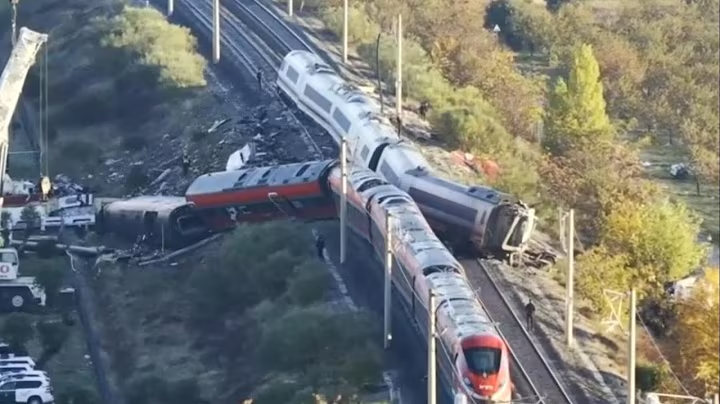
The crash happened on Wednesday morning along the high-speed railway route connecting Madrid with Seville. Two passenger trains operated by Renfe, Spain’s state-owned railway company, and private operator Iryo were involved.
According to preliminary information released by officials, a Renfe train struck the rear of an Iryo train that had stopped on the tracks. The impact derailed carriages and left badly damaged wreckage scattered across the area.
Hundreds of passengers were traveling on the two trains. Emergency crews rushed to the scene to rescue survivors, transport injured passengers to hospitals, and search for people trapped inside damaged carriages.
Authorities warned that identifying victims and completing the recovery operation would take time.

Rescue Teams Continue Searching the Wreckage
Search-and-rescue operations continued into Thursday as emergency personnel examined the wrecked trains.
Police officers, military personnel, firefighters, and other emergency workers have been assisting with the recovery effort. Search dogs and specialized equipment have also been deployed to help locate victims.
The operation has been particularly challenging because some carriages were severely damaged or overturned during the collision.
Officials have urged patience as investigators and emergency teams work through the site. Families awaiting news about missing relatives are also receiving assistance.
The Spanish government has declared three days of national mourning, beginning Thursday, to honor those who died and show solidarity with the injured and their loved ones.

Investigators Examine Possible Railway Safety Failures
Authorities are investigating what caused the two trains to collide. Spain’s Transport Minister Óscar Puente said preliminary information pointed to a serious problem involving railway traffic control.
Officials reported that a computer or control-system failure had led to trains being stopped on the affected section of track. Investigators are examining why traffic was subsequently allowed to resume despite a stop signal remaining in place.
The precise sequence of events and responsibility for the collision have not yet been conclusively established. Officials have said the investigation must determine whether procedural mistakes or safety-system failures contributed to the disaster.
The findings could have important consequences for railway operations and safety measures across Spain.
Spain Mourns Another Deadly Railway Disaster
The tragedy is especially painful because Spain experienced another fatal high-speed train collision earlier in 2026. That January accident killed 46 people in the southern region of Andalusia.

The latest crash has renewed questions about the safety of the country’s extensive high-speed rail network, which has long been regarded as one of Spain’s major transportation achievements.
Prime Minister Pedro Sánchez has pledged a thorough investigation and said the government will examine what happened and consider measures to prevent another disaster.
For now, the focus remains on supporting victims, identifying those who died, and helping survivors recover.
1. How many people died in the Spanish train crash?
The death toll reached at least 69 people as of October 29, 2026, according to regional authorities.

2. How did the Spanish royal family respond?
King Felipe VI and Queen Letizia expressed sympathy for the victims and their families, with plans to visit injured passengers in a Toledo hospital.
3. Where did the train collision happen?
The collision occurred near Urda in Toledo province, on the high-speed railway route connecting Madrid and Seville.
4. What caused the train crash?
Investigators are examining a possible railway control-system failure and the decision to allow a train to continue despite a stop signal. The cause has not yet been conclusively established.
As Spain observes national mourning, the royal family and government have joined grieving families in remembering those who lost their lives. The investigation and rescue efforts continue as the country seeks answers after one of its deadliest railway disasters in recent years.