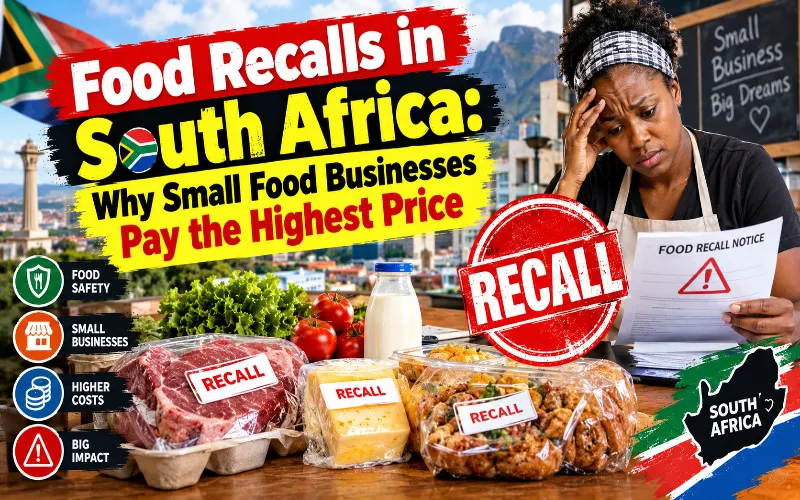

Food Recalls in South Africa : Food recalls are a serious concern for businesses across South Africa. When a product is found to be contaminated, incorrectly labelled, or unsafe to eat, it may need to be removed from shelves immediately. While large food manufacturers often have dedicated safety teams and financial resources to manage these situations, small food businesses can face a much harder challenge.
For independent restaurants, bakeries, takeaway shops, caterers, street-food vendors, and local grocery stores, even a single food safety incident can threaten daily operations. The cost goes beyond removing products from sale. Businesses may also lose customers, waste valuable stock, and struggle to rebuild their reputations.
Understanding why food recalls create such significant pressure on small businesses is essential for anyone working in South Africa’s food industry.
What Causes Food Recalls in South Africa?
A food recall happens when a product must be withdrawn from the market because it may pose a health risk or fail to meet applicable requirements.
Common reasons for food recalls include:
- Bacterial contamination: Harmful microorganisms, including Salmonella and certain strains of E. coli, can make people seriously ill.
- Undeclared allergens: Products containing milk, peanuts, eggs, or other allergens may put sensitive consumers at risk if the ingredients are not properly declared.
- Incorrect labelling: Missing ingredient information, misleading labels, or incorrect use-by dates can create safety concerns.
- Chemical contamination: Certain cleaning chemicals, pesticides, or other unwanted substances can contaminate food.
- Foreign objects: Pieces of plastic, metal, glass, or other materials may accidentally enter food during production or packaging.
Not every labelling problem carries the same level of risk, but any recall should be handled according to the nature of the problem and the instructions of the relevant authorities.
In South Africa, food businesses must pay attention to applicable food safety legislation, hygiene requirements, labelling rules, and official recall notices.
Why Small Food Businesses Suffer the Most
1. Limited Financial Resources
Money is one of the biggest challenges for small food businesses dealing with a recall.
A small bakery or takeaway restaurant may operate on tight profit margins. If several batches of ingredients or finished products become unsafe, the business may need to discard stock, refund customers, replace ingredients, and temporarily stop selling affected items.
Unlike larger companies, small operators may not have enough cash reserves to absorb these unexpected expenses.
For a business that depends on daily sales to pay rent, employees, suppliers, and electricity bills, a major loss can quickly become a financial crisis.
2. Damage to Customer Trust
Customers expect food businesses to provide safe products. When a recall is announced, people may question whether other products from the same business are also safe.
This can be especially damaging for independent restaurants and local food shops that depend on repeat customers and word-of-mouth recommendations.
Even if a business responds responsibly and removes the affected products, customers may take time to return.
Clear communication, honest explanations, and visible improvements to food safety practices can help restore confidence.
3. Difficulty Tracking Ingredients
Many small businesses purchase ingredients from several suppliers. A restaurant, for example, may receive meat from one distributor, vegetables from a local market, and sauces from another supplier.
If an ingredient is recalled, identifying every affected dish or product can become complicated without accurate purchasing and production records.
Businesses need to know where ingredients came from, when they were received, and which products used them. Good traceability makes it easier to identify affected stock and respond quickly.
4. Limited Food Safety Training
Small businesses may not have a dedicated food safety manager. Employees might handle receiving, storage, preparation, cleaning, and customer service during the same shift.
Without appropriate training, staff may overlook temperature controls, cross-contamination risks, cleaning procedures, or allergen information.
Simple, consistent training can make a major difference. Employees should understand how to store food safely, maintain hygiene, identify potentially unsafe products, and report problems immediately.
5. Pressure to Keep Operating
When sales are already tight, stopping production or removing a popular menu item can feel financially painful.
However, continuing to sell potentially unsafe food can expose customers to harm and create more serious legal, financial, and reputational consequences.
Customer safety must always come first. Businesses should follow official recall instructions and seek guidance from the appropriate authorities when necessary.
How Small Food Businesses Can Reduce Recall Risks
Although recalls cannot always be prevented, practical food safety measures can reduce risks and make a recall easier to manage.
Maintain accurate supplier records. Keep invoices, delivery notes, supplier contact details, product names, batch numbers, and relevant expiry dates.
Check deliveries carefully. Inspect packaging for damage, verify product labels, and ensure chilled or frozen foods arrive at appropriate temperatures.
Follow safe storage practices. Keep raw and ready-to-eat foods separate, maintain suitable refrigeration temperatures, and follow safe handling procedures.
Train employees regularly. Staff should understand personal hygiene, cleaning schedules, allergen management, and the importance of reporting food safety concerns.
Keep a recall action plan. Establish who will stop sales, isolate affected stock, contact suppliers, communicate with customers, and follow official instructions.
Monitor official announcements. Food businesses should pay attention to relevant South African government notices, supplier communications, and recall announcements.
These measures are generally affordable compared with the potential cost of a serious food safety incident.
What Should a Business Do When a Recall Happens?
Speed and organisation are essential when a recall affects a business.
First, identify the affected product using the product name, batch number, packaging details, and other information in the recall notice.
Next, stop selling or serving the affected product and separate the stock from other food items. Do not assume that changing the packaging or cooking the product will make it safe.
Contact the supplier and follow the instructions provided by the relevant authorities. Keep records of the products removed, quantities involved, and actions taken.
If customers may have purchased the affected product, follow official communication guidance and provide clear, accurate information. Never make unsupported claims that a product is safe.
Businesses should also review how the problem occurred and strengthen their procedures to prevent similar incidents.
Are small food businesses required to follow food safety rules in South Africa?
Yes. Small food businesses must comply with applicable South African food safety, hygiene, and labelling requirements. Specific obligations depend on the type of business and product.
Can a food recall permanently damage a small business?
Yes, it can. Financial losses and reduced customer confidence may affect future sales. However, a prompt, transparent, and responsible response can help limit the damage.
How can customers check food recall information?
Consumers can monitor official South African government announcements, relevant food safety notices, and communications from retailers or manufacturers.
What is the best way to prevent food recalls?
No system can eliminate every risk. However, reliable suppliers, proper storage, good hygiene, staff training, accurate records, and regular safety checks can significantly reduce preventable problems.

Read More