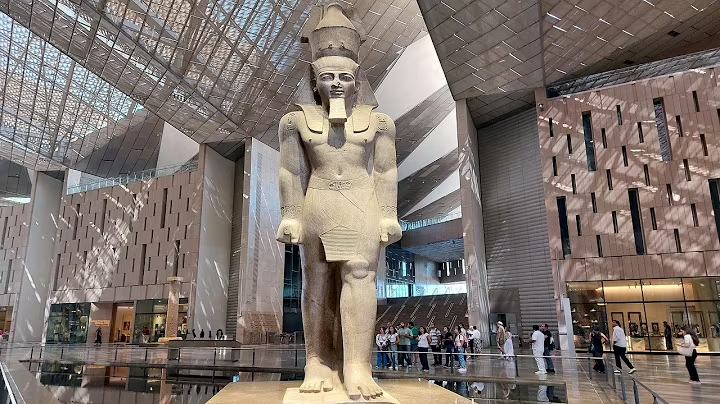
A remarkable Ramses II colossal statues discovery in Egypt has captured the attention of archaeologists and history enthusiasts around the world. Researchers have uncovered the remains of two enormous royal statues in Egypt’s Nile Delta, including one identified as Ramses II, one of the most powerful pharaohs of ancient Egypt.
The discovery followed an unexpected find by a local resident working on his land in Behbeit El-Hagar, a village in Egypt’s Gharbia Governorate. After noticing a stone block carrying ancient inscriptions, he alerted archaeological authorities. Subsequent excavations revealed the remains of two monumental statues and a pink granite block containing hieroglyphic inscriptions associated with the ancient ruler.
The discovery was announced by Egypt’s Ministry of Tourism and Antiquities in October 2026. Experts believe the finds could provide valuable information about the area’s history, ancient Egyptian architecture, and the building projects associated with Ramses II.
How Were the Ramses II Colossal Statues Discovered?
The discovery began when local resident Khaled el-Shahat found an unusual inscribed stone while working on his property in Behbeit El-Hagar.
Recognizing that the stone might be an important archaeological artifact, he contacted the local antiquities authorities. Specialists examined the find and organized rescue excavations with a team affiliated with Egypt’s Supreme Council of Antiquities.
The excavations uncovered fragments of two large royal statues. Archaeologists also found a pink granite block bearing hieroglyphic inscriptions that included royal titles associated with Ramses II.
The discovery demonstrates the importance of cooperation between local communities and archaeological experts. Reporting an unusual artifact can help protect historical objects and allow researchers to investigate their original location.
First Statue May Have Stood Nearly 28 Feet Tall
One of the most significant discoveries is the head of a colossal statue identified as Ramses II.

The surviving head measures approximately 1.6 meters, or 5.2 feet, in height. It depicts the pharaoh wearing the Double Crown, a symbol representing his authority over Upper and Lower Egypt.
Archaeologists estimate that the complete statue, including its base, may originally have stood around 8.5 meters, or 28 feet, tall.
Part of the statue’s back pillar was also recovered. An inscription on the pillar contains the pharaoh’s Horus name, helping specialists identify the ruler represented by the monument.
Although most of the statue has not survived, the size of the head suggests that the original monument was an impressive display of royal power.
Second Giant Statue Also Linked to Ramses II
Archaeologists uncovered a substantial surviving portion of a second royal statue measuring approximately 2.4 meters, or 7.9 feet, in length.
The statue is missing its legs and base, and part of its traditional royal headdress has been damaged. However, the head retains recognizable facial features.
Egyptian officials believe the second statue may also depict Ramses II because its facial characteristics resemble those of the first statue.

Further study will help researchers determine how the two monuments were originally arranged and whether they belonged to a larger architectural complex.
The discovery of two monumental statues in the same area offers an important opportunity to investigate the history of royal monuments in Egypt’s Nile Delta.
What Do the Ancient Hieroglyphics Reveal?
Alongside the statues, archaeologists discovered a pink granite block measuring approximately 1.3 meters, or 4.3 feet, in length.
The block contains hieroglyphic inscriptions featuring royal titles associated with Ramses II.
Two important titles identified in the inscriptions are:
- Nesw-Bity: A title meaning King of Upper and Lower Egypt.
- Sa-Ra: A title meaning Son of Ra, connecting the pharaoh to the ancient Egyptian sun god.
These inscriptions are valuable because they help researchers connect archaeological objects to particular rulers and understand how ancient Egyptian kings presented their authority.
The inscriptions, together with the surviving statue features, provide evidence supporting the identification of the monuments.

Who Was Ramses II?
Ramses II, also known as Ramesses the Great, ruled Egypt from approximately 1279 to 1213 B.C. His reign lasted about 66 years, making him one of the longest-reigning rulers of ancient Egypt.
He belonged to Egypt’s Nineteenth Dynasty and became famous for military campaigns, extensive construction projects, and monumental works of art.
Some of the best-known monuments associated with his reign include the temples at Abu Simbel and major building works at Karnak.
Colossal statues played an important role in ancient Egyptian royal culture. They displayed the pharaoh’s authority, reinforced religious traditions, and helped preserve his image for future generations.
The newly discovered statue remains add to the evidence of Ramses II’s building activities and influence across different parts of Egypt.
Why Is Behbeit El-Hagar Important?
Behbeit El-Hagar is an archaeological site in Egypt’s Nile Delta, known for the remains of an ancient temple dedicated to Isis, an important goddess in Egyptian religion.
Previous archaeological research identified architectural fragments bearing the name of Ramses II in the area. Researchers have suggested that the pharaoh may have undertaken significant building work connected with the temple complex.

The latest discovery provides additional evidence for investigating this possibility.
However, archaeologists still need to determine the original positions of the statues, their relationship to the temple, and the historical development of the surrounding area.
The site may reveal more about how royal construction projects extended beyond Egypt’s most famous ancient centers.
What Happens Next in the Investigation?
Archaeological work at Behbeit El-Hagar is continuing as specialists document and study the recovered fragments.
Researchers will examine the inscriptions, compare the statues’ features, and investigate their archaeological context. These studies may help establish how the monuments were originally used and where they stood.
Conservation will also be important to protect the surviving stone from environmental damage and ensure that the artifacts remain available for future research.
The investigation is still developing, and the discovery does not mean that two complete statues have been recovered. Instead, archaeologists have found substantial remains of two monumental sculptures, with important sections missing.

Future excavations may reveal additional fragments and provide a clearer understanding of the site’s ancient history.
Why the Ramses II Statue Discovery Matters
The Ramses II colossal statues discovery in Egypt is important because it combines monumental sculpture, royal inscriptions, and evidence from a historically significant archaeological site.
The finds could help researchers better understand royal building projects during the New Kingdom period and the role of monumental art in ancient Egyptian society.
The discovery also highlights how much historical evidence may remain buried beneath modern agricultural land and settlements.
Although many questions remain, the two statue fragments and the inscribed granite block represent valuable additions to the archaeological record of ancient Egypt.
1. What was discovered in Egypt in October 2026?
Archaeologists discovered remains of two colossal royal statues believed to depict Ramses II, along with a pink granite block carrying hieroglyphic inscriptions.
2. How tall was the Ramses II colossal statue?
The larger statue may originally have stood approximately 8.5 meters, or 28 feet, tall, including its base.
3. Where were the statues discovered?
The remains were found in Behbeit El-Hagar in Gharbia Governorate, within Egypt’s Nile Delta.
4. Who discovered the ancient statues?
Local resident Khaled el-Shahat alerted archaeological authorities after finding an inscribed stone on his property, prompting further excavations.
5. Why is the discovery important?
The finds may provide new evidence about Ramses II’s building activities, royal inscriptions, and the historical development of the Behbeit El-Hagar archaeological site.