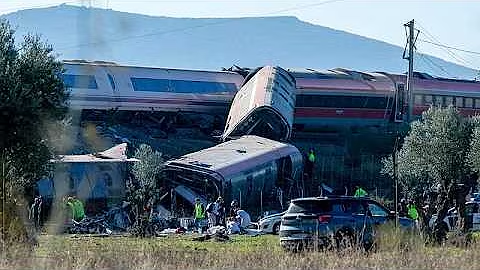
Spain Train Crash: Death Toll Rises to 68 : A deadly Spain train crash has claimed at least 68 lives after two high-speed passenger trains collided in central Spain on Wednesday, October 28, 2026. The devastating accident left multiple carriages damaged, dozens of people injured, and emergency crews working to rescue passengers from the wreckage.
The collision happened near Urda in Toledo province, south of Madrid, along the high-speed railway line connecting Madrid with southern Spain. Authorities reported that dozens of passengers required hospital treatment, while rescuers continued searching the damaged trains for victims and survivors.
The tragedy has shocked the country and raised urgent questions about railway safety. Spanish officials are investigating the circumstances surrounding the collision, including a possible failure involving railway safety systems and the decisions made by the train control center.
What Happened in the Spain Train Crash?
The high-speed train collision in Spain involved two passenger trains operated by Renfe and Iryo. Both trains were traveling from Madrid toward southern Spain when the accident occurred.
According to initial reports, a Renfe train struck the rear of an Iryo train that had stopped on the tracks. The impact derailed several carriages, with damaged sections falling down an embankment.
The accident occurred in a rural area near Urda and Los Yébenes, in Toledo province. Emergency services rushed to the scene after receiving reports of the collision.
Passengers were left dealing with broken windows, damaged seats, scattered luggage, and injured travelers. Some people managed to escape through windows, while others needed help from firefighters and rescue personnel.
The scale of the destruction made the operation difficult, particularly in the most heavily damaged carriages.
Death Toll Reaches at Least 68
Regional authorities in Castilla-La Mancha confirmed that at least 68 people had died in the collision, according to reports published on October 28.
Dozens of other passengers were injured, with 58 people reported to have required hospital treatment in an Associated Press report. Other live updates cited higher overall injury figures, so the latest official numbers should be checked as the situation develops.

Emergency workers continued searching the wreckage while medical teams transported injured passengers to nearby hospitals.
Authorities also began identifying the victims and contacting their relatives. The process was complicated by the number of passengers involved and the severity of the damage.
The death toll made the disaster one of Spain’s deadliest recent railway accidents and intensified calls for answers about how the collision occurred.
Witnesses Describe the Terrifying Collision
Survivors described a sudden impact that sent luggage, mobile phones, and other personal belongings flying through the carriages.
Passenger Ignacio Relaño, who was traveling on the Renfe train, told Spanish broadcaster TVE that the train slowed abruptly before the collision. He described feeling the impact as the carriage leaned to one side and passengers were thrown around.
Other passengers reported being pushed forward in their seats and struggling to understand what had happened.
Nearby construction workers also rushed to help after hearing the crash. According to reporting by El País, worker David Gómez and his colleagues crossed fencing to reach the accident site and used first-aid kits to assist injured passengers before emergency services arrived.
Their efforts provided immediate assistance to people who were trying to escape from the damaged trains.
What Caused the Train Collision?
Investigators are examining the possible causes of the Spain railway accident, including a failure involving the signaling system and instructions issued by railway control personnel.

Transport Minister Óscar Puente said a computer communications failure affected a section of the railway’s safety system. The malfunction automatically stopped trains operating in the affected area.
According to his preliminary account, the central control center later authorized the Renfe train to continue moving even though a red stop signal remained active because another train was stationary ahead.
Puente described the decision as inexplicable and said the circumstances required a thorough investigation.
Officials are examining signaling records, train movements, control-center communications, and other technical evidence to establish the sequence of events.
The findings are still preliminary. Investigators must determine exactly why the train was authorized to move and whether technical or operational failures contributed to the collision.
Which Trains Were Involved?
Two railway operators were involved in the disaster.
Renfe is Spain’s state-owned railway company and operates the country’s AVE high-speed passenger services.
Iryo is a private high-speed railway operator that began operating in Spain in 2022.
Reports indicated that the two trains carried a combined total of approximately 544 passengers. Both were traveling from Madrid toward destinations in southern Spain when the collision occurred.

Following the accident, authorities suspended services on the affected high-speed line. The disruption affected routes connecting Madrid with Ciudad Real and Andalusia.
Passengers were advised to check official railway announcements for cancellations, delays, and alternative travel arrangements.
Pedro Sánchez Responds to the Disaster
Spanish Prime Minister Pedro Sánchez expressed his condolences to the victims and their families as emergency services continued their work.
The government pledged to investigate the collision and establish whether mistakes or failures contributed to the disaster.
Spain’s royal family also expressed sympathy for those affected, while emergency personnel continued rescuing passengers and providing medical assistance.
The tragedy has prompted widespread concern about railway safety, particularly because Spain experienced another deadly train collision earlier in 2026.
Authorities have emphasized that determining the facts and supporting victims’ families remain priorities.
Spain Faces Renewed Railway Safety Questions
Spain has invested heavily in its high-speed rail network, which connects major cities and serves millions of passengers. The network is an important part of the country’s transportation infrastructure.
However, the latest collision has renewed questions about signaling systems, railway maintenance, and the procedures followed when technical problems interrupt train services.

In January 2026, another deadly collision involving Renfe and Iryo trains near Adamuz, in Córdoba province, killed 46 people, according to Reuters.
The two accidents have increased public scrutiny of railway operations. Investigators will need to determine whether the latest disaster resulted from an isolated failure or revealed broader safety concerns.
Any changes to railway procedures will depend on the findings of the investigation.
Rail Services Suspended After the Accident
Rail traffic on the Madrid-Andalusia high-speed line was suspended following the collision.
The suspension allowed emergency teams to access the wreckage and investigators to examine the scene. It also disrupted journeys for passengers traveling between Madrid and destinations in southern Spain.
Railway operators were expected to provide updates as services changed. Travelers should confirm their train’s status before leaving for the station.
Meanwhile, hospitals and emergency services continued assisting injured passengers.
What Happens Next?
Investigators will examine the trains, signaling equipment, communications records, and instructions issued by the control center before the crash.
Their findings should help establish the exact sequence of events and determine whether railway safety procedures were followed.

For families who lost loved ones, the immediate priority is receiving accurate information and support. Survivors may also need continued medical treatment and emotional assistance after the traumatic experience.
The Spain train crash has left the country mourning while officials work to answer critical questions about the disaster. Further official updates will clarify the final casualty figures, the cause of the collision, and any measures needed to reduce the risk of similar accidents.
1. How many people died in the Spain train crash?
At least 68 people were reported dead on October 28, 2026. The latest official casualty figures should be checked because rescue and identification efforts were continuing.
2. Where did the high-speed train collision happen?
The crash occurred near Urda in Toledo province, central Spain, on the high-speed line connecting Madrid with southern Spain.
3. Which trains were involved in the accident?
The collision involved a Renfe AVE train and an Iryo passenger train.
4. What caused the Spain train crash?
Authorities were investigating a possible signaling-system malfunction and an instruction allowing a train to move despite an active stop signal. A final determination depends on the investigation.
5. Are railway services affected by the collision?
Yes. Services on the Madrid-Andalusia high-speed line were suspended after the crash. Travelers should consult official railway updates for current information.