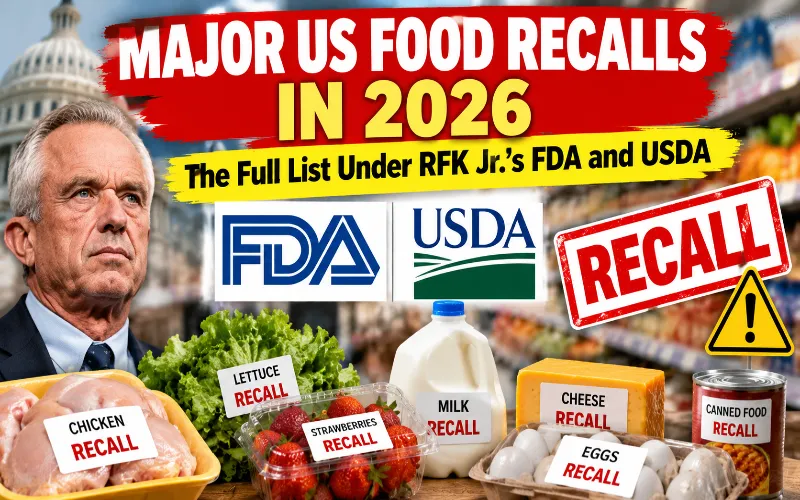

US Food Recalls : Food safety remains an important concern for American consumers in 2026. From packaged meals and dairy products to seafood, meat, and fresh produce, food recalls can affect products sold in grocery stores, supermarkets, and restaurants across the United States.
The U.S. Food and Drug Administration (FDA) and the U.S. Department of Agriculture (USDA) play important roles in monitoring food safety, investigating contamination concerns, and informing consumers when products may pose a health risk.
This guide covers notable food recalls reported in 2026, the reasons products are recalled, how consumers can identify affected items, and the steps families should take to protect themselves.
Important: Food recall information changes frequently. Always check the latest official notices before deciding whether a specific product is affected.
What Are Food Recalls and Why Do They Happen?
A food recall occurs when a company or regulatory authority identifies a potential safety issue with a food product and takes steps to remove it from sale or prevent further consumption.
Recalls can happen for several reasons, including:
- Bacterial contamination: Harmful bacteria such as Listeria, Salmonella, or certain strains of E. coli.
- Undeclared allergens: Ingredients such as milk, eggs, peanuts, or sesame that are not properly listed on the label.
- Foreign materials: Potential contamination with glass, metal, or other unwanted objects.
- Improper storage: Temperature problems that may compromise food safety.
- Labeling or inspection issues: Incorrect information or failures to meet applicable food safety requirements.
A recall does not automatically mean that every product made by a company is unsafe. Consumers should carefully check the specific brands, product sizes, lot codes, and dates listed in each official notice.
FDA and USDA: What Is the Difference?
The FDA and USDA share responsibility for food safety in the United States, but they generally oversee different categories of products.
| Agency | Main responsibilities |
|---|---|
| FDA | Most packaged foods, dairy products, seafood, fresh produce, snacks, and beverages |
| USDA Food Safety and Inspection Service (FSIS) | Most meat, poultry, and certain processed egg products |
Both agencies publish recall announcements and safety alerts to help consumers understand potential risks.
Major US Food Recalls Reported in 2026
Several significant recalls and food safety alerts have been reported during 2026. The following examples illustrate the types of products and safety concerns consumers should watch for.
1. Kayem Foods Meat and Poultry Recall
In October 2026, a major recall involving approximately 1.58 million pounds of ready-to-eat meat and poultry products from Kayem Foods was reported because of concerns about improper storage.
Potentially affected categories included deli meats, bacon, hot dogs, sausages, turkey products, and other prepared meats.
Consumers should consult the official USDA notice to identify the affected products, establishment numbers, and distribution details. Do not consume a product that matches an active recall notice.
2. Seafood Recalls Over Possible Listeria Contamination
Seafood products have also been the subject of food safety alerts in 2026.
Listeria monocytogenes is a bacterium that can cause serious illness, particularly in pregnant people, older adults, and individuals with weakened immune systems.
Consumers who purchase smoked fish or other refrigerated seafood should check product labels, lot numbers, and use-by dates against official recall announcements.
3. Dairy Products and Cheese Safety Alerts
Certain dairy products and cheeses have been recalled or flagged for potential bacterial contamination.
Possible hazards include Listeria and Shiga toxin-producing E. coli. These organisms can cause gastrointestinal illness and, in some cases, severe complications.
Consumers should pay particular attention to notices involving raw milk cheeses and other refrigerated dairy products. Do not assume that a product is safe simply because it looks or smells normal.
4. Packaged Foods With Undeclared Allergens
Undeclared allergens are another important reason for food recalls.
A packaged product may contain an ingredient that is missing from its label or allergen statement. This can create a serious risk for people with food allergies.
Common allergens requiring attention include milk, eggs, peanuts, tree nuts, fish, crustacean shellfish, wheat, soybeans, and sesame.
Anyone with a food allergy should review the full recall notice and avoid affected products even if no illnesses have been reported.
5. Fresh Produce and Contamination Concerns
Fresh produce can occasionally become contaminated during growing, harvesting, processing, or distribution.
Food safety investigations may involve lettuce, sprouts, peppers, or other produce linked to potential bacterial contamination.
Consumers should check official notices for affected growing regions, brands, packaging dates, and distribution areas. Washing produce is a useful food safety practice, but it cannot guarantee that contaminated food is safe.
Recall status can change: These examples are not a complete list of every US food recall in 2026. Product availability, affected lot numbers, and recall status must be verified against current agency announcements.
How to Check Whether Your Food Has Been Recalled
Checking a product before eating it is straightforward.
- Find the product name and brand. Read the package carefully.
- Check the lot or batch number. Similar products may have different production codes.
- Review the expiration or use-by date. Compare it with the dates in the recall notice.
- Visit the appropriate government website. Search the FDA or USDA recall database.
- Follow the official instructions. Depending on the notice, you may need to discard the food or return it to the retailer.
If you cannot determine whether your product is affected, contact the manufacturer or the relevant regulatory agency for clarification.
What Should You Do if You Bought Recalled Food?
If you discover that a food product matches an active recall, take the following precautions.
Stop Eating the Product
Do not taste the food to determine whether it is safe. Harmful bacteria and other hazards may not change the product’s appearance, smell, or flavor.
Check the Recall Instructions
Some recalls instruct consumers to throw products away, while others allow returns for a refund. Follow the specific instructions provided in the notice.
Clean Surfaces and Storage Areas
If recalled food leaked or spilled, clean the affected refrigerator shelves, utensils, containers, and preparation surfaces appropriately.
Monitor for Symptoms
Depending on the hazard, foodborne illness may cause diarrhea, vomiting, fever, or abdominal cramps. Seek medical advice if symptoms develop after consuming a potentially contaminated product.
Pregnant people, older adults, young children, and people with weakened immune systems should be particularly cautious about possible exposure to serious foodborne pathogens.
What Does RFK Jr. Have to Do With Food Recalls?
Robert F. Kennedy Jr. has served as the US Secretary of Health and Human Services, the department that oversees the FDA.
The FDA’s food safety work includes monitoring products, communicating risks, and coordinating with companies and other authorities when recalls are necessary. The USDA FSIS separately oversees the safety of many meat and poultry products.
Food recalls can result from routine testing, consumer complaints, company investigations, inspection findings, or reports of illnesses. A recall announcement by itself does not establish that a particular administration caused the underlying safety problem.
To evaluate claims about food safety policy in 2026, consumers should distinguish documented recall facts from political commentary and rely on official agency records for product-specific information.
How Can Consumers Stay Safe From Recalled Foods?
A few practical habits can help households reduce food safety risks.
- Check recall alerts regularly: Review FDA and USDA announcements.
- Keep food packaging until needed: Labels and lot numbers make identification easier.
- Store food at safe temperatures: Refrigerate perishable foods promptly.
- Prevent cross-contamination: Keep raw meat separate from ready-to-eat foods.
- Follow cooking instructions: Use a food thermometer where appropriate.
- Pay attention to allergy information: Read ingredient labels and updated product notices.
These steps cannot eliminate every food safety risk, but they can help consumers identify hazards and respond appropriately.
1. Where can I find the full list of US food recalls in 2026?
Visit the FDA’s official recall and safety alert database for most FDA-regulated foods. For meat, poultry, and certain processed egg products, check the USDA FSIS recall website.
2. Are all recalled foods dangerous?
Not necessarily. Recalls may be issued because of confirmed contamination, a potential health risk, an undeclared allergen, or another regulatory concern. Always read the specific notice to understand the reason and recommended action.
3. What are the most common reasons for food recalls?
Common reasons include bacterial contamination, undeclared allergens, foreign materials, improper handling or storage, and labeling or inspection problems.
4. Can I eat food that has been recalled if it looks normal?
No. Appearance and smell cannot reliably establish whether a recalled product is safe. Follow the recall instructions rather than relying on visual inspection.
5. Should I throw away recalled food immediately?
Follow the official notice. It may direct you to discard the product or return it to the store. Avoid consuming it while determining the appropriate action.
6. Does the FDA handle every food recall?
No. The FDA oversees most foods, while the USDA FSIS handles most meat, poultry, and certain processed egg products.
7. How often should I check food recall alerts?
Check periodically, especially if you purchase products frequently mentioned in food safety notices, have food allergies, or want to stay informed about recent outbreaks.
US food recalls in 2026 highlight the importance of checking product labels, following food safety alerts, and responding promptly when a product is identified as potentially unsafe.
The FDA and USDA provide official information to help consumers identify affected products and understand what actions to take. Rather than relying solely on headlines or social media posts, verify the brand, lot number, product dates, and recall instructions before making a decision.
The safest approach is simple: stay informed, check official recall notices, and never consume a product that matches an active food safety warning.

Read More