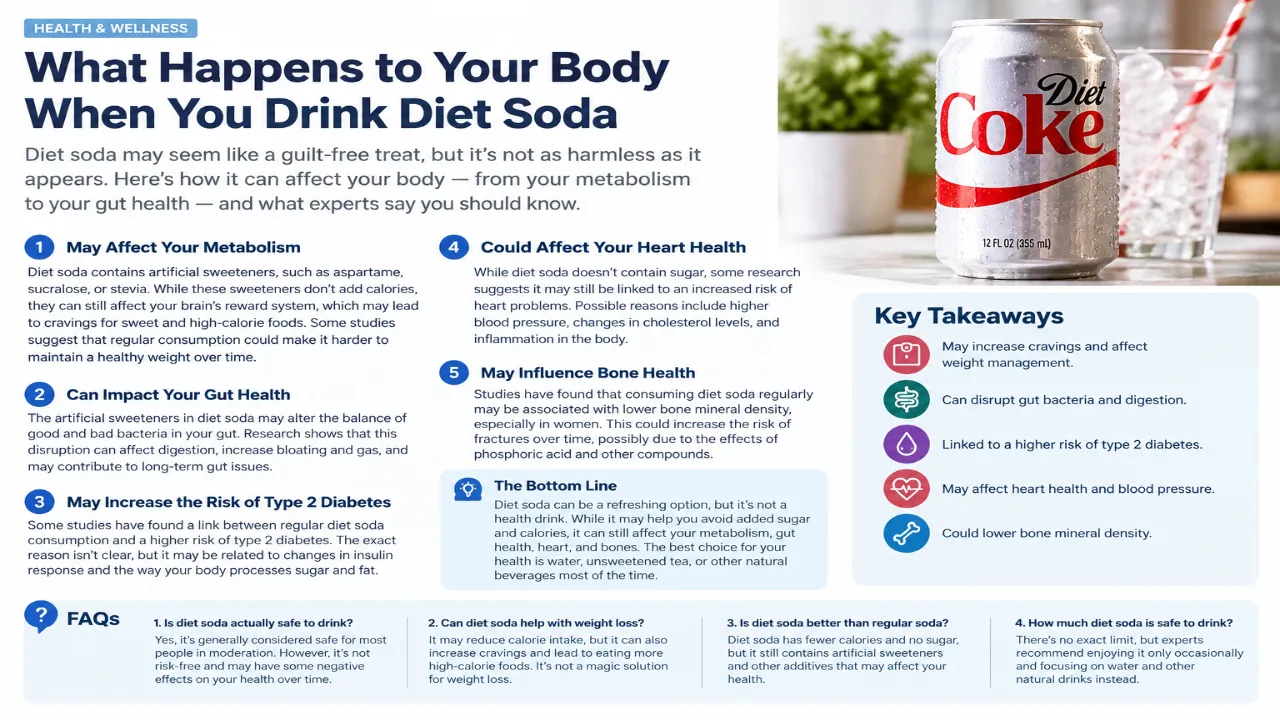

Drink Diet Soda Diet soda is a popular choice for people who want the sweet taste of soda without the added sugar and calories. From Diet Coke to Diet Pepsi and other zero-sugar beverages, these drinks are often marketed as alternatives to regular soda.
But what actually happens to your body when you drink diet soda regularly?
Diet soda can help reduce sugar and calorie intake when it replaces regular soda, but it is not the same as drinking water. Researchers continue to study how non-sugar sweeteners may affect appetite, gut health, metabolism, and long-term health. The evidence is mixed, so it is important to separate established facts from possible associations.
1. You Consume Fewer Calories Than With Regular Soda
One of the main advantages of diet soda is that it generally contains little or no sugar and very few calories.
A regular soda can contain a substantial amount of added sugar. Replacing it with a zero-sugar version can reduce your sugar and calorie intake, especially if you drink soda frequently.
However, drinking diet soda does not automatically lead to weight loss. Your overall eating habits, physical activity, sleep, and total calorie intake still matter.
The bottom line: Switching from regular soda to diet soda may help reduce calories, but it works best as part of a balanced eating pattern.
2. Artificial Sweeteners May Affect Your Appetite
Diet sodas often contain sweeteners such as aspartame, sucralose, or acesulfame potassium. These provide sweetness without the same amount of calories as sugar.
Scientists are studying whether exposure to sweet tastes without sugar can influence cravings, appetite, and food choices. However, research has not established that diet soda consistently increases hunger in everyone.
Some people may find that diet soda helps them manage their preference for sweet drinks, while others may notice that it encourages them to choose more sweet foods.
What to know: Pay attention to your own eating habits rather than assuming diet soda will either increase or decrease your appetite.
3. It May Affect Gut Health, but Research Is Still Developing
Your gut contains a community of microorganisms that helps with digestion and other important functions. Researchers are investigating whether certain non-sugar sweeteners can change the composition or activity of these microorganisms.
Some studies suggest that particular sweeteners may affect gut bacteria or glucose responses in certain individuals. However, findings vary by sweetener, dose, and study design.
There is not enough evidence to conclude that every diet soda harms gut health or causes digestive problems.
If you notice bloating or discomfort after drinking diet soda, consider reducing your intake and seeing whether your symptoms improve.
4. Diet Soda and Blood Sugar: What Happens?
Unlike regular soda, diet soda generally does not contain large amounts of sugar, so it usually causes a much smaller immediate rise in blood glucose.
This can make it an alternative to sugary beverages for some people, including those who are monitoring their carbohydrate intake.
However, the response may depend on the sweetener, the individual, and the rest of the meal. Research into the long-term effects of non-sugar sweeteners on glucose regulation is ongoing.
Important: Observational studies have linked frequent diet beverage consumption with a higher risk of type 2 diabetes, but these studies cannot prove that diet soda causes diabetes. Other factors, including existing weight and health concerns, may influence the results.
People with diabetes should follow their healthcare professional’s advice when choosing beverages.
5. Long-Term Heart Health Research Remains Inconclusive
Some observational studies have found associations between frequent consumption of artificially sweetened beverages and cardiovascular problems. These findings have attracted attention, but an association does not prove cause and effect.
For example, people who are already concerned about their weight or blood sugar may switch to diet drinks. This can make it difficult for researchers to determine whether the beverage itself contributes to a health outcome.
Scientists continue to investigate the possible long-term effects of different sweeteners and beverages.
For everyday heart health, focus on established habits such as eating a variety of fruits and vegetables, staying physically active, limiting excess sodium, and choosing water regularly.
6. Diet Soda Can Affect Your Teeth
Diet soda usually contains less or no sugar, which can reduce the fuel available to bacteria that cause tooth decay.
However, many diet sodas are acidic. Frequent exposure to acidic drinks can gradually weaken tooth enamel, even when the beverage contains no sugar.
To help protect your teeth:
- Drink water regularly throughout the day.
- Avoid sipping acidic drinks continuously over long periods.
- Rinse your mouth with water after drinking soda.
- Wait before brushing after acidic drinks to avoid brushing softened enamel.
Choosing sugar-free soda may help reduce sugar-related cavity risk, but it does not eliminate the risk of acid erosion.
7. Caffeine May Affect Sleep and Make You Feel Jittery
Some diet sodas contain caffeine, while others are caffeine-free. If you drink a caffeinated version, the caffeine may temporarily increase alertness.
Too much caffeine can also cause restlessness, nervousness, a racing heartbeat, or difficulty sleeping in sensitive individuals.
Drinking caffeinated diet soda late in the day may interfere with sleep, depending on your sensitivity and total caffeine intake.
A simple tip: Check the label for caffeine content and consider switching to caffeine-free drinks or water later in the day if sleep is a concern.
8. Does Diet Soda Help With Weight Loss?
Diet soda may help some people reduce calorie intake when it replaces sugar-sweetened drinks. Short-term studies have found that replacing sugary beverages with low- or no-calorie alternatives can produce modest reductions in calorie intake and body weight.
However, diet soda alone is not a weight-loss solution.
The World Health Organization has advised against relying on non-sugar sweeteners as a long-term strategy for weight control, noting that evidence of lasting benefits is limited and that long-term observational studies have reported potential health associations. The recommendation is conditional and does not replace established safety assessments for individual sweeteners.
For sustainable weight management, focus on nutritious meals, portion awareness, regular physical activity, adequate sleep, and habits you can maintain over time.
How Much Diet Soda Is Safe to Drink?
There is no single daily amount that is appropriate for everyone. The answer depends on the drink’s ingredients, your caffeine sensitivity, your overall diet, and individual health considerations.
Approved sweeteners have established acceptable intake limits set by food-safety authorities. Those limits differ by sweetener and are based on the amount consumed relative to body weight.
For most people, the practical approach is to avoid making diet soda their main source of hydration. Water and other unsweetened beverages are good everyday choices.
Healthier Drinks to Choose More Often
If you want to cut back on diet soda, try these alternatives:
- Plain water: A simple choice for everyday hydration.
- Sparkling water: Provides carbonation without the sweeteners found in many diet sodas.
- Unsweetened tea: Offers flavor without added sugar.
- Infused water: Add lemon, cucumber, berries, or mint for a refreshing taste.
- Unsweetened herbal tea: A caffeine-free option for many people.
You do not necessarily need to eliminate diet soda completely. Instead, consider how often you drink it and whether it is replacing water or other nutritious choices.
Key Takeaways
- Diet soda generally contains little or no sugar and fewer calories than regular soda.
- Replacing sugary drinks with diet soda may help reduce calorie intake.
- Research into gut health, appetite, diabetes, and heart health is ongoing.
- Sugar-free soda can still contribute to tooth enamel erosion because of its acidity.
- Caffeinated varieties may affect sleep and cause jitters in sensitive people.
- Water and other unsweetened drinks are good choices for everyday hydration.
1. Is it safe to drink diet soda every day?
The answer depends on your overall intake and individual circumstances. Approved sweeteners are assessed for safety within established intake limits, but drinking diet soda every day is not necessary for good health. Water is a better everyday hydration choice.
2. Can diet soda cause weight gain?
Diet soda does not automatically cause weight gain. It may help reduce calorie intake when replacing sugary beverages, but research on long-term weight outcomes is mixed. Your overall diet and lifestyle remain important.
3. Does diet soda raise blood sugar?
Diet soda generally causes a much smaller immediate blood-sugar response than regular soda because it contains little or no sugar. Long-term effects may vary, and research into individual sweeteners is continuing.
4. Is diet soda healthier than regular soda?
Diet soda usually contains less sugar and fewer calories than regular soda, which can be an advantage when reducing sugar intake. However, its acidity, caffeine content, and the uncertain long-term evidence around some sweeteners are worth considering. Water remains a strong everyday choice.

Read More