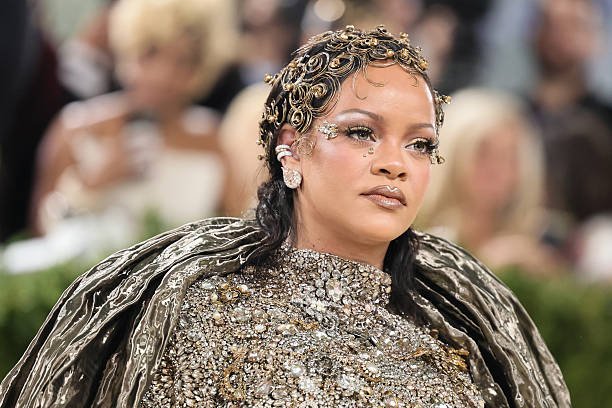
Rihanna has entered the political conversation after reacting to comments by former MSNBC host Joy Reid about Donald Trump’s return to the White House. The Grammy-winning singer argued that Americans who skipped the 2024 presidential election also played a role in the outcome, sparking fresh debate across social media.
The discussion gained attention after a video featuring Reid and journalist Charles M. Blow circulated online. Rihanna responded to a fan commenting on the video, suggesting that responsibility for the election result should not fall exclusively on people who voted for Trump. <Cite refs={[“turn941042search0″,”turn941042search3”]}/>
Why Rihanna Responded to Joy Reid’s Comments
The controversy began with a political discussion about Trump’s second presidential victory. In the widely shared video, Joy Reid reflected on the election and argued that the result represented the preferences of many Americans who supported the Republican candidate.
Her remarks prompted a strong response from social media users. Some agreed that voters who supported Trump should accept responsibility for the political consequences, while others questioned whether the discussion overlooked Americans who did not participate.
Rihanna joined the conversation through an Instagram comment. Rather than directing her criticism exclusively at Trump voters, she pointed to eligible Americans who chose not to cast a ballot.
Her response quickly attracted attention because of her international fame and her history of encouraging people to participate in U.S. elections.
What Rihanna Said About Americans Who Did Not Vote
Rihanna shared her reaction beneath a social media post featuring the political discussion. Responding to a comment blaming Trump voters for the election result, the singer wrote:

“Believe it or not, those who didn’t vote at all, also did this!”
The message was brief, but it raised an important question about political participation. Rihanna’s point was that people who stay away from elections can also affect the final outcome, even when they do not directly support a particular candidate.
Her comment generated discussion among fans and political observers, particularly about whether non-voters should share responsibility for the policies introduced by an elected administration.
However, people abstain from voting for different reasons. Some are dissatisfied with the available candidates, while others encounter practical obstacles or feel disconnected from the political process.
Donald Trump’s 2024 Election Victory Explained
Donald Trump defeated Democratic nominee Kamala Harris in the November 2024 presidential election, securing a second, nonconsecutive term as president.
Trump previously served as president from 2017 to 2021. After losing the 2020 election to Joe Biden, he returned to the White House following his 2024 victory.

The campaign focused on several major issues, including inflation, immigration, employment, taxes, and the overall cost of living. Voters weighed these issues differently, and their choices reflected a variety of political priorities.
The election result continues to generate discussion about the factors that influence presidential contests. Rihanna’s remarks have added voter participation to that conversation, highlighting the potential importance of eligible citizens who do not cast ballots.
How Many Americans Stayed Home in 2024?
Voter turnout is an important part of understanding any election. According to figures cited in recent reporting, approximately 87 million eligible Americans did not vote in the 2024 presidential election. That represented roughly 36% of the voting-eligible population. <Cite refs={[“turn941042search0″,”turn941042search11”]}/>
Although turnout was relatively high by modern U.S. standards, millions of eligible people still did not participate.
Non-voters are not a politically uniform group. Some support Democrats, some favor Republicans, and others do not identify with either party. Their reasons for staying home also differ.
This makes it difficult to determine exactly how nonparticipation affected the election. The outcome depends on factors such as where non-voters live, which candidates they might have supported, and whether additional votes would have changed results in competitive states.

Nevertheless, the figures help explain why voter turnout remains a central subject in discussions about American elections.
Rihanna’s Citizenship Adds Another Layer to the Story
Rihanna, whose full name is Robyn Rihanna Fenty, was born in Barbados and became one of the world’s most recognizable music stars. Beyond her music career, she is known for her beauty and fashion businesses and her public engagement with social issues.
Although she resides in the United States, Rihanna is not a U.S. citizen and is therefore ineligible to vote in American federal elections.
That detail has become part of the online discussion surrounding her latest comment. Rihanna is encouraging eligible Americans to participate in a political process in which she herself cannot cast a ballot.
She has previously encouraged her American followers to vote and has publicly expressed interest in the election process.
Her latest remarks reflect her view that civic participation matters, even when people are unhappy with the candidates or the political choices available to them.

Economic Hardship Remains Part of the Debate
The discussion surrounding Rihanna’s comments also touches on economic concerns facing American households.
Housing costs, grocery bills, healthcare expenses, childcare, and transportation remain important considerations for many families when evaluating the direction of the country.
Political disagreements often emerge over how much responsibility government policies bear for economic conditions. Inflation, interest rates, employment trends, international developments, and decisions made by businesses can all influence household finances.
It is therefore important to distinguish between Rihanna’s opinion about voter responsibility and the broader economic evidence. Her comment expresses a view about participation in the election; it does not establish that non-voters alone are responsible for economic hardship.
Still, the exchange highlights how election outcomes can lead to renewed conversations about accountability and the relationship between political decisions and everyday life.
Why Rihanna’s Comment Is Getting Attention
Celebrity comments about politics frequently attract attention because they reach audiences beyond traditional political news. Rihanna’s global fan base has helped bring this discussion to entertainment and social media platforms.

Her statement has also highlighted a disagreement over what causes election outcomes. Some people emphasize the decisions of voters who supported the winning candidate, while others focus on turnout, campaign strategies, or dissatisfaction with the available choices.
The debate is likely to remain relevant as political parties consider how to engage voters ahead of future elections.
Ultimately, Rihanna’s message is straightforward: eligible citizens who choose not to vote should also consider how their absence may affect the result.
1. Why did Rihanna respond to Joy Reid?
Rihanna reacted to a social media post featuring Reid discussing Donald Trump’s election victory. She argued that Americans who did not vote also contributed to the outcome.
2. What did Rihanna say about non-voters?
She wrote, “Believe it or not, those who didn’t vote at all, also did this!” in response to a fan’s comment about Trump voters.
3. Did Donald Trump win the 2024 presidential election?
Yes. Donald Trump defeated Kamala Harris in November 2024 and returned to the White House for a second, nonconsecutive term.
4. Can Rihanna vote in the United States?
No. Rihanna was born in Barbados and is not a U.S. citizen, making her ineligible to vote in U.S. federal elections.
5. Why is voter turnout important?
Voter turnout determines how many eligible citizens participate in an election. When people do not vote, their preferences are not directly represented in the ballots cast, although the effect on the final result varies by election and location.