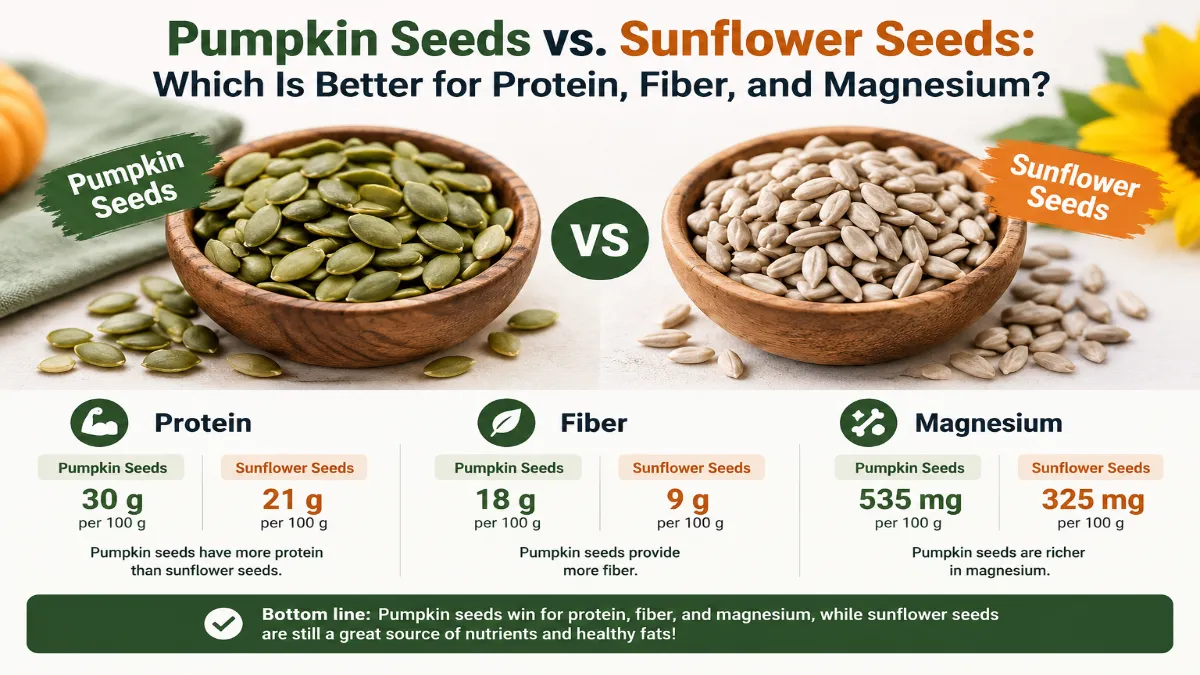
Pumpkin Seeds vs. Sunflower Seeds : Pumpkin seeds and sunflower seeds are two popular nutritional powerhouses that can easily be added to a healthy diet. Both provide plant-based protein, healthy fats, vitamins, and minerals, making them excellent choices for people looking to improve their daily nutrition. However, their nutritional profiles differ, especially when it comes to protein, fiber, and magnesium.
So, which is better: pumpkin seeds or sunflower seeds? The answer depends on your nutritional goals. Let’s compare their key nutrients, health benefits, and everyday uses to help you decide which seeds deserve a place in your diet.
1. Pumpkin Seeds vs. Sunflower Seeds: Nutritional Comparison
Both seeds contain valuable nutrients, but pumpkin seeds are particularly notable for magnesium, while sunflower seeds are rich in vitamin E.
A one-ounce serving (about 28 grams) of unsalted seeds provides approximately the following amounts:
| Nutrient | Pumpkin Seeds | Sunflower Seeds |
|---|---|---|
| Calories | 160–165 | 160–170 |
| Protein | 8–9 g | 5–6 g |
| Fiber | 1.5–2 g | 3–3.5 g |
| Magnesium | 150–160 mg | 90–100 mg |
| Healthy fats | High | High |
| Vitamin E | Lower | Higher |
Values are approximate and vary by variety, preparation, and whether the seeds are shelled.
2. Which Seeds Are Better for Protein?
Pumpkin seeds are generally the better choice for protein. They provide approximately 8–9 grams of protein per ounce, compared with around 5–6 grams in sunflower seeds.
Protein helps build and repair muscles, supports normal body functions, and contributes to feeling satisfied after meals. For people following vegetarian or plant-focused diets, pumpkin seeds can be a convenient way to increase protein intake.
You can sprinkle pumpkin seeds over oatmeal, blend them into smoothies, or add them to salads and homemade trail mix. However, neither seed should be your only protein source. Combining seeds with beans, lentils, eggs, dairy products, or other protein-rich foods can help create a balanced diet.
3. Which Seeds Provide More Fiber?
Sunflower seeds generally provide more fiber per ounce, although the exact amount depends on the product and preparation.
Dietary fiber supports healthy digestion, helps maintain regular bowel movements, and can contribute to feeling full for longer. Eating enough fiber as part of a balanced diet may also support healthy cholesterol levels.
Sunflower seeds make an easy addition to whole-grain cereal, yogurt, salads, and homemade snacks. Pumpkin seeds also contain fiber, but their fiber content is relatively modest compared with many high-fiber foods.
For a more substantial fiber boost, pair either seed with vegetables, fruit, oats, beans, or whole grains.
4. Which Seeds Are Better for Magnesium?
Pumpkin seeds are the clear winner for magnesium. A one-ounce serving can supply roughly 150–160 milligrams, while sunflower seeds typically provide around 90–100 milligrams.
Magnesium is an essential mineral involved in muscle and nerve function, energy production, and maintaining normal bones. It also contributes to normal heart rhythm and helps regulate several processes throughout the body.
Adding pumpkin seeds to salads, oatmeal, soups, or roasted vegetables is a simple way to increase magnesium intake. Sunflower seeds remain a nutritious option, but pumpkin seeds offer more magnesium per serving in most common comparisons.
5. Sunflower Seeds Have an Advantage in Vitamin E
Although pumpkin seeds lead in protein and magnesium, sunflower seeds deserve special attention for their vitamin E content.
Vitamin E acts as an antioxidant, helping protect cells from damage caused by free radicals. It also supports immune function and healthy skin.
Sunflower seeds are among the more concentrated food sources of vitamin E. Adding a small handful to a salad or snack can help increase your intake of this important nutrient.
Rather than choosing one seed exclusively, eating both can provide a wider variety of vitamins, minerals, and beneficial fats.
6. How to Eat Pumpkin and Sunflower Seeds
Both seeds are versatile and easy to incorporate into everyday meals.
- For breakfast: Add pumpkin seeds or sunflower seeds to oatmeal, yogurt, or whole-grain cereal.
- For salads: Sprinkle either seed over leafy greens for extra texture and nutrients.
- For snacks: Choose unsalted seeds and enjoy a small handful between meals.
- For smoothies: Blend pumpkin seeds into smoothies for additional protein and minerals.
- For baking: Mix seeds into whole-grain bread, muffins, or homemade granola.
Choose unsalted or lightly salted varieties when possible, and pay attention to portion sizes because both seeds are calorie-dense.
Conclusion
Pumpkin seeds and sunflower seeds are both nutritious additions to a balanced diet, but they excel in different areas. Pumpkin seeds are generally better for protein and magnesium, while sunflower seeds usually provide more fiber and substantially more vitamin E.
If your main goal is to increase protein and magnesium, pumpkin seeds are an excellent option. If you want additional fiber and vitamin E, sunflower seeds may be the better fit. For overall nutritional variety, consider enjoying both in moderate portions as part of a healthy eating pattern.