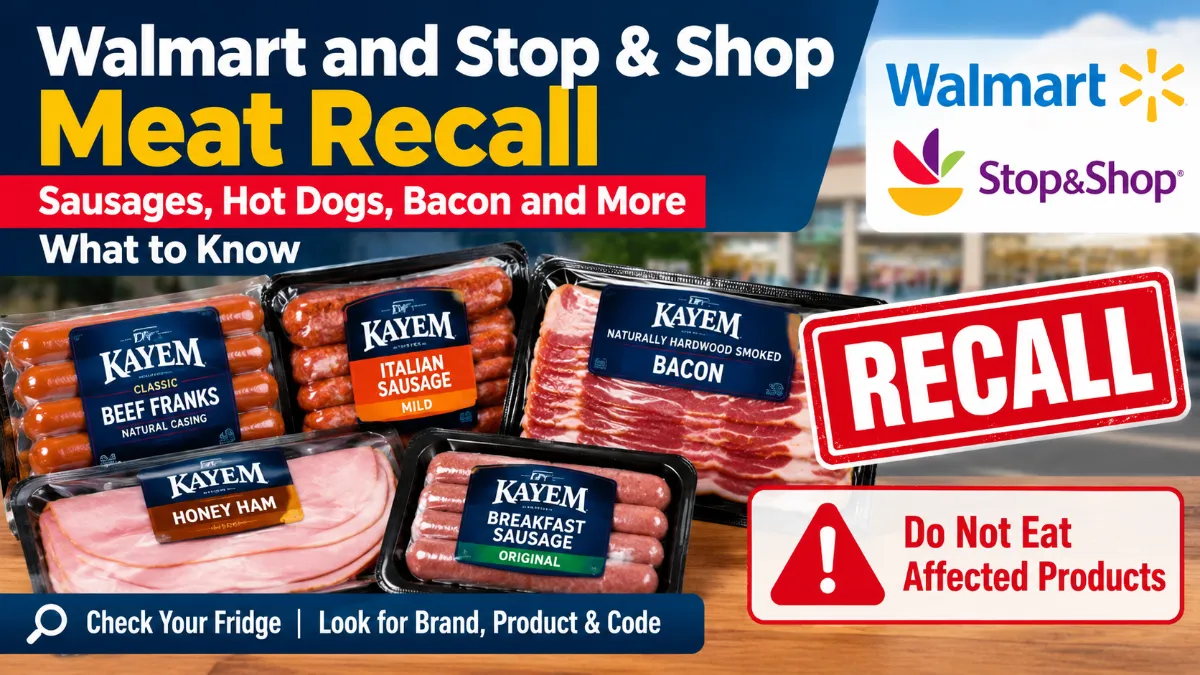
Kayem Foods has recalled more than 1.5 million pounds of meat and poultry products over possible temperature problems. Check affected brands, product codes, and what shoppers should do.
Thousands of shoppers across the United States may want to take a closer look at the meat products sitting in their refrigerators. Kayem Foods has announced a major recall involving hot dogs, sausages, bacon, ham, turkey, and other ready-to-eat meat and poultry products.
The recall affects approximately 1.58 million pounds of products that may not have been kept at safe temperatures during storage, according to the U.S. Department of Agriculture’s Food Safety and Inspection Service (USDA FSIS).
Some affected products were sold at Walmart and Stop & Shop, along with other retailers. The important thing to know is that the recall covers multiple brands and product varieties, so checking the package details matters more than simply looking at the product name.
Here’s what shoppers need to know, including which brands are involved, how to identify recalled products, and what to do if you have one at home.
Why Were These Meat Products Recalled?
Kayem Foods, Inc., based in Chelsea, Massachusetts, announced the voluntary recall after discovering a problem with temperature control at a warehouse.
According to the USDA, the company received a complaint on October 1, 2026, about meat products arriving at a retail location at warm temperatures. An investigation found that a warehouse cooler used to store ready-to-eat meat and poultry products had experienced temperature deviations.
The affected products may therefore have been exposed to temperatures outside safe storage conditions.
Keeping meat properly refrigerated is essential because unsafe storage temperatures can allow harmful bacteria to grow. Even products that have already been cooked can become unsafe if they are not handled and stored correctly.
The USDA announced the recall on October 17, 2026, and classified it as a Class I recall, meaning there is a reasonable probability that consuming the affected products could cause serious health consequences or death.
As of the USDA’s announcement, no confirmed illnesses had been reported in connection with the recalled products.
Which Meat Products Are Included in the Recall?
The recall covers approximately 1,584,361 pounds of ready-to-eat meat and poultry products produced between March 31 and October 7, 2026.
The affected items include a wide range of products that people commonly buy for breakfast, lunch, dinner, and quick snacks.
Products covered by the recall include:
- Hot dogs and beef franks
- Breakfast and other sausages
- Bacon, including smoked varieties
- Ham and ham steaks
- Turkey breast and deli turkey
- Bologna and liverwurst
- Kielbasa and bratwurst
- Corned beef and other prepared meats
- Meatballs, breakfast patties, and meatloaf products
Not every product in these categories is recalled. The notice applies to specific products, packages, and production codes.
Shoppers should check the official recall list rather than assuming that every package of bacon, sausage, or hot dogs is affected.
Which Brands Are Affected?
The recall includes products sold under several brand names, including:
- Kayem
- Al Fresco
- McKenzie
- Deutschmacher
- Essem
- Jordan’s
- Triple M
- Winnisimmet St. Butchery
Some of these products may be familiar to shoppers in the Northeast, where several of the brands have an established retail presence.
Because the recall involves many product varieties and package sizes, the brand name alone may not be enough to determine whether an item is affected.
For the complete product list, visit the official USDA recall announcement. Kayem has also published a company recall notice.
Were the Recalled Meats Sold at Walmart and Stop & Shop?
Yes, reports identify affected products sold through Walmart and Stop & Shop, but the availability varies by retailer and location.
Walmart
Walmart’s recall information identifies affected products sold at select stores in the following states:
- Connecticut
- Maine
- Massachusetts
- New Hampshire
- New York
- Pennsylvania
- Rhode Island
- Vermont
The retailer says it works to remove recalled products from sale and block affected items from being purchased.
Stop & Shop
Stop & Shop customers should also check their refrigerators for affected Kayem products. Reports on the recall indicate that recalled products were sold in Massachusetts and Rhode Island, as well as select stores in Connecticut.
The recall should not be interpreted as affecting every meat product sold at either retailer. Only products matching the official recall details are included.
The USDA says affected products were shipped to retail and food-service locations nationwide, as well as to Hong Kong. Additional distribution information may be available through the agency’s recall updates.
How Can You Tell If Your Meat Is Recalled?
Checking the package carefully is the best way to determine whether a product is included.
The USDA identifies three establishment numbers associated with the recalled products:
- EST. M/P 7839
- EST. P 20935A
- EST. M 9520
These numbers appear inside the USDA mark of inspection on affected packaging.
However, finding one of these numbers should be only part of your check. Compare the product name, brand, package details, and other identifying information with the official recall list.
Here’s a simple way to check:
- Look through your refrigerator and freezer for the listed meat and poultry brands.
- Find the USDA inspection mark and establishment number on each package.
- Compare the package with the official USDA recall notice and product labels.
- If the product matches the recall, do not eat it.
If you cannot determine whether a product is affected, contact the manufacturer or the retailer for help.
What Should You Do If You Have a Recalled Product?
If you discover a product covered by the recall, do not taste it or try to make it safe by cooking it again.
The USDA advises consumers to throw away affected products or return them to the place of purchase.
Follow these precautions:
Do not eat the recalled meat. Proper appearance or smell does not establish that a product is safe.
Dispose of it or return it. Follow the recall instructions and contact the retailer if you need help with a return.
Clean surfaces that may have contacted the product. Wash your hands and clean utensils, shelves, or other surfaces that may have been contaminated.
Seek medical advice if you are concerned about illness. If you ate a recalled product and develop symptoms or are worried about possible exposure, contact a healthcare professional.
For questions about the recall, Kayem Foods lists its customer service number as 800-426-6100 and its email as, The company lists customer service hours as Monday through Friday, 7:30 a.m. to 4 p.m. Eastern time.
Consumers can also contact the USDA Meat and Poultry Hotline at 888-674-6854.
Can You Get Sick From Meat That Was Stored at the Wrong Temperature?
Meat and poultry products need to be kept at appropriate temperatures to help prevent the growth of harmful bacteria.
When refrigeration conditions are not maintained, the risk of foodborne illness can increase. Ready-to-eat products deserve particular attention because consumers may eat them without additional cooking.
Foodborne illness can cause symptoms such as diarrhea, vomiting, stomach cramps, and fever. Symptoms and severity vary depending on the cause and the person affected.
However, the recall announcement does not mean that every affected package is contaminated or that everyone who ate one will become ill.
The USDA reported no confirmed illnesses linked to the recalled products at the time of its announcement. Consumers should still follow the recall instructions because potentially unsafe storage conditions are a serious food-safety concern.
1. Why did Kayem Foods recall its meat products?
Kayem Foods recalled the products because a warehouse cooler experienced temperature deviations, potentially exposing ready-to-eat meat and poultry products to unsafe storage conditions.
2. How much meat is included in the recall?
Approximately 1,584,361 pounds of ready-to-eat meat and poultry products are included in the USDA announcement.
3. Are all Walmart and Stop & Shop meat products affected?
No. The recall covers specific Kayem and other branded products. Customers should compare their packages with the official USDA product list rather than assuming every meat product at these stores is recalled.
4. Is it safe to cook recalled meat before eating it?
No. Consumers should not eat affected products or try to make them safe through additional cooking. Follow the USDA’s instructions to discard or return them.
5. Have any illnesses been reported?
The USDA stated that no confirmed illnesses had been reported in connection with the recall as of its October 17, 2026, announcement.
6. Where can I find the complete list of recalled products?
The USDA FSIS recall notice provides the official recall details and links to product information. The manufacturer’s recall announcement is another useful source.
Final Thoughts
The Kayem Foods recall is an important reminder to check food-safety announcements, especially when buying products such as hot dogs, sausages, bacon, ham, and deli meats.
Although affected products were sold at Walmart, Stop & Shop, and other retail and food-service locations, the recall applies only to identified products. Checking the brand, package information, and establishment number can help you determine whether anything in your refrigerator is affected.
If you find a recalled item, do not eat it. Throw it away or return it to the store, and consult the official USDA notice for the latest information.
Taking a few minutes to check your groceries is a simple way to stay informed and protect your household.
Editorial note: This article is based on the USDA FSIS and Kayem Foods recall announcements available as of October 23, 2026. Product lists and distribution details may be updated, so readers should consult the official sources for the latest information.