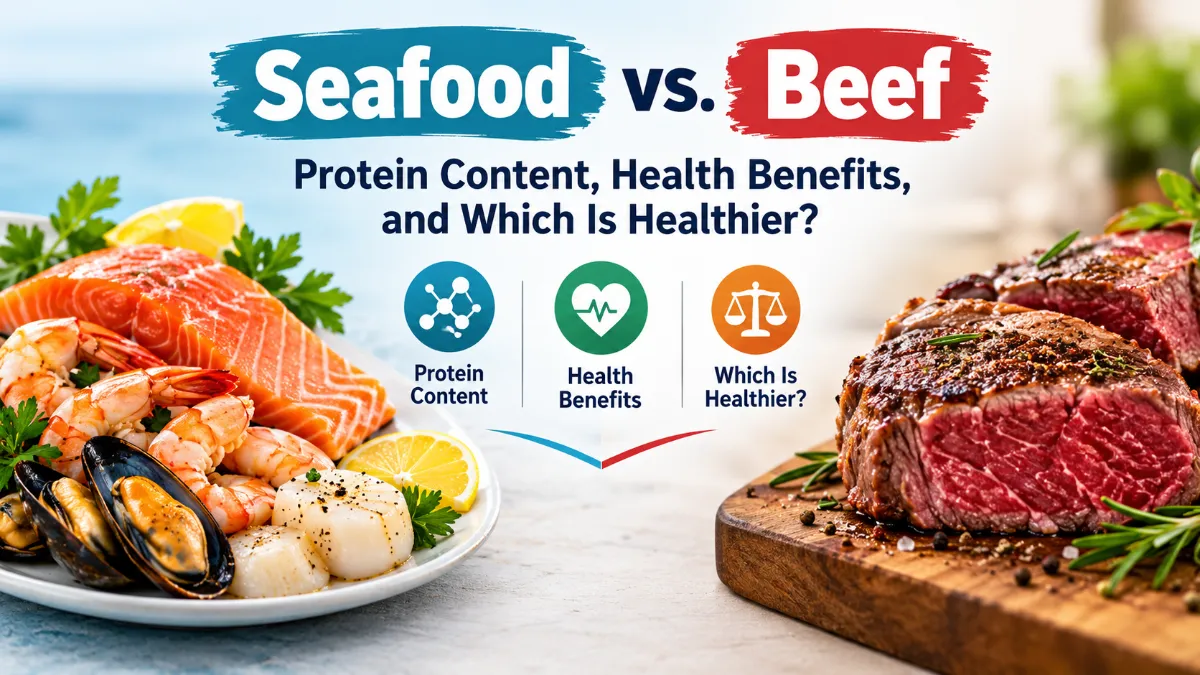

Seafood vs. Beef : When choosing a protein-rich meal, seafood and beef are two popular options Seafood vs. beef protein in the American diet. Both provide essential nutrients that support muscle growth, recovery, and overall health. However, their protein content, calorie counts, fat levels, and health benefits can vary depending on the type and cut you choose.
So, which has more protein: seafood or beef? The answer depends on the specific food. Tuna, shrimp, salmon, and lean beef can all provide substantial amounts of protein. The best choice depends on your nutritional goals, cooking method, and personal preferences.
Nutrition and Health
• Protein: Both contain roughly the same amount of protein per 100 grams; however, fish protein is easier to digest because it contains less connective tissue.
• Fat: Seafood—especially fatty fish like salmon and trout—is low in saturated fat (ranging from 0.9 grams to 2.1 grams per 100 grams) and contains beneficial anti-inflammatory omega-3 fatty acids (EPA and DHA). In contrast, beef is significantly higher in both total fat and saturated fat (for example, 3 ounces of lean ground beef contains about 15 grams of fat, whereas the same amount of salmon contains about 4 grams of fat).
• Vitamins and Minerals: Beef is rich in heme iron and zinc. Seafood provides a variety of vitamins and minerals, including vitamin D, calcium, and a significant amount of vitamin B-12.
Seafood vs. Beef: Which Has More Protein?
Seafood and beef are complete protein sources, meaning they contain all nine essential amino acids the body needs. Both can help maintain muscle mass, repair tissues, and support normal body functions.
Some seafood options, particularly tuna and shrimp, provide a high amount of protein without many calories. Lean beef is also protein-rich and offers important nutrients, including iron, zinc, and vitamin B12.
For people who want to build muscle, manage their weight, or eat a balanced diet, both foods can be valuable additions to their meals.
Protein Comparison: Seafood vs. Beef
The following table provides approximate protein amounts for common cooked seafood and beef portions. Actual values vary by species, cut, preparation, and serving size.
| Food | Serving Size | Approx. Protein |
|---|---|---|
| Shrimp | 3 oz | 20–21 g |
| Salmon | 3 oz | 22–24 g |
| Cod | 3 oz | 19–21 g |
| Tuna | 3 oz | 22–26 g |
| Lean beef steak | 3 oz | 22–26 g |
| Lean ground beef | 3 oz | 21–25 g |
| Roast beef | 3 oz | 21–25 g |
Key takeaway: Beef may provide slightly more protein than some seafood varieties, but tuna, shrimp, and other fish can match or exceed certain beef options. Protein content alone does not determine which food is healthier.
Seafood nutrition estimates are consistent with the U.S. Food and Drug Administration’s seafood nutrition information. Beef values vary with the cut and fat content.
Nutritional Benefits of Seafood
Seafood offers protein along with several vitamins and minerals. Certain varieties, especially fatty fish, also contain omega-3 fatty acids that support heart health.
1. Supports Muscle Growth
Fish and shellfish provide complete protein that helps repair muscle tissue after exercise. Including seafood in meals can help people meet their daily protein needs without relying entirely on meat.
Good choices include tuna, salmon, shrimp, cod, and trout.
2. Provides Heart-Healthy Fats
Fatty fish such as salmon, sardines, and mackerel contain omega-3 fatty acids. These fats are associated with cardiovascular benefits and make seafood an appealing alternative to fatty cuts of beef.
The American Heart Association recommends eating fish, particularly fatty fish, about twice a week as part of a heart-healthy eating pattern.
3. Can Be Lower in Saturated Fat
Many fish varieties contain less saturated fat than fatty cuts of beef. Shrimp and white fish can also be relatively low in calories when prepared without heavy sauces or excessive oil.
For a lighter meal, choose baked, grilled, or steamed seafood instead of deep-fried options.
4. Supplies Essential Nutrients
Depending on the variety, seafood provides vitamin B12, selenium, iodine, and vitamin D. These nutrients contribute to normal nerve function, thyroid function, red blood cell formation, and other important processes.
Nutritional Benefits of Beef
Beef remains a useful source of high-quality protein, particularly for people who enjoy red meat and want to increase their intake of certain essential nutrients.
1. Helps Build and Maintain Muscle
Beef contains all nine essential amino acids. Its protein supports muscle repair, recovery, and the maintenance of lean body mass.
Lean steak and lean ground beef can fit into a balanced, high-protein diet.
2. Provides Highly Absorbable Iron
Beef supplies heme iron, a form of iron that the body generally absorbs more readily than the non-heme iron found in many plant foods.
Iron is essential for producing hemoglobin, which helps carry oxygen throughout the body. This makes beef a useful dietary source of this mineral.
3. Contains Vitamin B12 and Zinc
Beef is a source of vitamin B12, which supports healthy nerves and red blood cell production. It also provides zinc, a mineral involved in immune function, wound healing, and protein synthesis.
4. Offers a Satisfying Protein Option
Protein can help you feel full after a meal. A portion of lean beef served with vegetables and whole grains can make a filling lunch or dinner.
However, fattier cuts may contain considerably more calories and saturated fat than lean cuts.
Seafood vs. Beef: Key Nutritional Differences
| Nutritional Factor | Seafood | Beef |
|---|---|---|
| Protein | High, depending on variety | High, depending on cut |
| Saturated fat | Often lower in fish | Varies; higher in fatty cuts |
| Omega-3 fats | High in certain fatty fish | Generally low |
| Iron | Varies by species | Good source of heme iron |
| Vitamin B12 | Present in many varieties | Excellent source |
| Calories | Often lower for lean fish and shellfish | Varies with fat content |
| Best preparation | Baking, grilling, steaming | Grilling, roasting, broiling |
Neither seafood nor beef is automatically the better choice in every situation. The nutritional differences depend on the specific food and how it is prepared.
Which Is Better for Weight Loss?
If your goal is weight management, lean seafood can be a convenient option because many varieties provide plenty of protein with relatively few calories.
Shrimp, cod, and other lean fish can work well in meals with vegetables, brown rice, or other fiber-rich foods. Salmon contains more fat and calories than many white fish varieties, but it also supplies beneficial omega-3 fats.
Lean beef can also fit into a weight-management plan. Sirloin, round steak, and extra-lean ground beef provide protein and important nutrients.
To make either option more suitable for weight management:
- Choose reasonable portions. A serving of about 3 ounces of cooked meat or fish is a useful starting point.
- Limit deep-frying. Breading and frying can substantially increase calories.
- Watch sauces and toppings. Creamy sauces, butter, and sugary glazes can add extra calories.
- Include vegetables and whole grains. These foods provide fiber and other nutrients that support a balanced eating pattern.
Weight loss ultimately depends on your overall eating pattern, activity level, and energy balance—not simply whether you choose seafood or beef.
Which Is Better for Heart Health?
Seafood, particularly fatty fish, often has an advantage when heart health is the main priority. Salmon, sardines, and mackerel provide omega-3 fatty acids, while many fish varieties contain relatively little saturated fat.
Beef can still be part of a heart-conscious diet when you choose lean, unprocessed cuts and keep portions moderate. Regularly eating large amounts of fatty or processed meat is less desirable because of its saturated fat content and, for processed meats, other health concerns.
A practical approach is to eat seafood regularly and include lean beef in moderation, alongside beans, lentils, nuts, and other nutritious protein sources.
How to Choose Between Seafood and Beef
Your best choice depends on what you want from your diet.
- For high protein with fewer calories: Consider shrimp, cod, or other lean seafood.
- For omega-3 fatty acids: Choose salmon, sardines, or mackerel.
- For iron: Lean beef is a useful option.
- For vitamin B12: Both seafood and beef can contribute meaningful amounts.
- For muscle building: Either food can help, provided your overall diet supplies enough protein and calories.
- For variety: Rotate seafood, lean beef, poultry, beans, and other protein sources throughout the week.
People who are pregnant, planning pregnancy, or feeding young children should follow FDA and EPA guidance when selecting fish because mercury levels differ among species.
Final Verdict: Seafood or Beef?
Seafood and beef both provide high-quality protein, but neither always contains more. Tuna and shrimp can deliver impressive protein amounts, while lean beef remains a dependable source of protein, iron, zinc, and vitamin B12.
Seafood is often the better choice for omega-3 fats and lower saturated fat, while lean beef can be especially useful for iron intake and protein variety. Rather than choosing only one, include both in a balanced diet if they suit your preferences and nutritional needs.
The most important factors are portion size, food quality, cooking method, and the overall balance of your meals.
Frequently Asked Questions (FAQs)
1. Does seafood have more protein than beef?
Not always. Tuna and some shellfish can provide as much protein as lean beef or more per serving. The exact amount depends on the seafood variety, beef cut, and serving size.
2. Is seafood healthier than beef?
Seafood can offer omega-3 fatty acids and often contains less saturated fat than fatty beef. Beef provides heme iron and is rich in vitamin B12 and zinc. Both can fit into a healthy diet when chosen and prepared thoughtfully.
3. Which is better for building muscle, seafood or beef?
Both provide complete protein and essential amino acids. Your total daily protein intake, training routine, recovery, and overall nutrition matter more than choosing one over the other.
4. How much protein should an adult eat daily?
The general Recommended Dietary Allowance for healthy adults is approximately 0.8 grams of protein per kilogram of body weight per day. Individual needs can vary with age, activity level, pregnancy, health conditions, and fitness goals

Read More