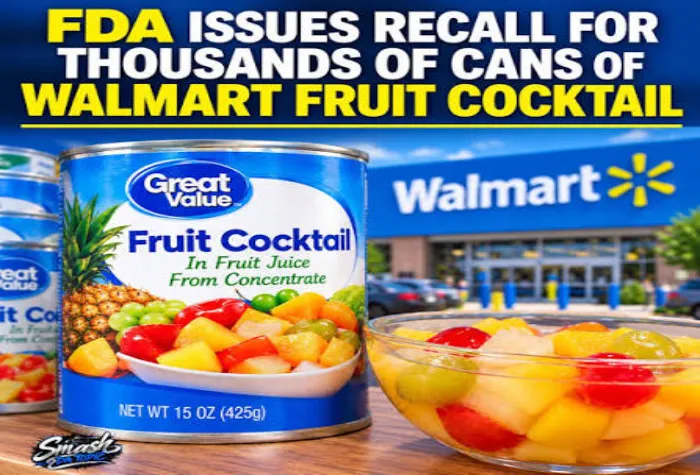

Walmart Recalls More than 44,000 cans of Great Value fruit cocktail sold at Walmart have been recalled over potential lead contamination. Check the lot number, UPC, expiration date, and affected states. The recall involves Great Value Fruit Cocktail in Fruit Juice from Concentrate, a Walmart-distributed product manufactured by Pacific Coast Producers. The company initiated the voluntary recall on October 1, 2026, after identifying a potential problem involving elevated levels of lead. The U.S. Food and Drug Administration (FDA) classified the recall as Class II on October 20.
As of October 25, 2026, shoppers should pay close attention to the product’s lot code, UPC, and best-if-used-by date to determine whether a can in their pantry is affected. The recall covers specific cans distributed to seven states, rather than every Great Value fruit product sold at Walmart.
Here is what consumers need to know about the recall, the potential health risks, and the steps to take if they find an affected can.
Why Were More Than 44,000 Fruit Cocktail Cans Recalled?
According to the FDA’s enforcement report, Pacific Coast Producers recalled the affected fruit cocktail because of potential contamination with elevated levels of lead.
Lead is a toxic metal that can enter the environment through sources such as soil, water, and industrial pollution. Food can sometimes become contaminated during growing, processing, or manufacturing.
The recall covers 1,836 cases, with 24 cans in each case. That brings the total number of affected cans to 44,064.
The FDA assigned the recall a Class II classification on October 20. Under the agency’s recall definitions, this category applies when exposure to a product may cause temporary or medically reversible health consequences, or when the probability of serious health consequences is considered remote.
A Class II classification does not mean that every can contains lead or that everyone who consumes the product will become ill. However, the potential contamination is a reason to take the recall seriously.
The FDA also states that there is no known safe level of lead exposure. Consumers should therefore avoid eating the affected product, even if it looks, smells, and tastes normal.
Which Walmart Fruit Cocktail Cans Are Included in the Recall?
The recall applies to one specific product and lot. Shoppers should compare the details printed on their cans with the information below.
| Product detail | Information |
|---|---|
| Brand | Great Value |
| Product name | Fruit Cocktail in Fruit Juice from Concentrate |
| Can size | 15 ounces (425 grams) |
| Manufacturer | Pacific Coast Producers |
| Distributor | Walmart Inc. |
| Lot code | 6FCB 04 C2263 |
| UPC/barcode number | 078742369570 |
| Best-if-used-by date | September 1, 2027 |
| Total quantity recalled | 44,064 cans |
| FDA classification | Class II |
The UPC is the number printed beneath the product’s barcode. The lot code and date are separate identifying details that can help shoppers determine whether their product matches the recall notice.
Do not rely on the brand name alone. Other Great Value products and cans from different production lots are not automatically included in this recall.
If you have the specified 15-ounce fruit cocktail, check all three identifying details before deciding what to do next.
Which States Received the Recalled Cans?
According to the FDA’s enforcement report, the affected cans were distributed to Walmart locations in these seven states:
- Alabama
- Arizona
- Louisiana
- New Mexico
- Pennsylvania
- Washington
- Wyoming
Consumers in these states should check their pantries, cupboards, and other places where canned fruit may be stored.
If you live elsewhere, do not assume that a product is affected simply because it carries the Great Value brand. Compare the UPC, lot number, and date with the recall details, and consult the official FDA notice for the latest information.
The distribution list identifies where the recalled cases were sent. It does not establish that every Walmart store in those states received the product or that every can reached a consumer.
What Should You Do If You Have the Recalled Fruit Cocktail?
If you find a can matching the recall information, do not eat it or serve it to anyone else.
Follow these practical steps to handle the product safely.
1. Stop Using the Product
Do not open or taste the fruit cocktail to check whether it is contaminated. Lead contamination cannot reliably be detected by looking at, smelling, or tasting food.
2. Keep It Separate From Other Food
Set the can aside so that no one accidentally uses it in a snack, dessert, fruit salad, or other recipe. Keep it away from children.
3. Ask Walmart About a Return
Contact your local Walmart or its customer service department to ask about return and refund options. Keep the product information available so the store can identify the affected lot.
Walmart has stated that it moves quickly to remove affected products from stores and block sales at registers and online when notified of recalls.
4. Dispose of It if Necessary
If you cannot return the product, follow the instructions in the official recall notice or from the retailer or manufacturer for safe disposal. Do not donate the recalled food or give it to another household.
5. Seek Medical Advice if You Are Concerned
If you or a family member has eaten the recalled fruit cocktail, do not assume that illness will necessarily occur. However, if you are concerned about possible lead exposure, contact a healthcare professional for guidance.
This is especially important when a young child may have consumed the product. A healthcare professional can determine whether any assessment or testing is appropriate.
Why Is Lead Contamination a Serious Food Safety Concern?
Lead exposure is a concern because the metal can affect multiple systems in the human body. The potential effects depend on factors such as the amount of lead, duration of exposure, and a person’s age and health.
Children are particularly vulnerable because their brains and nervous systems are still developing. Lead exposure can affect learning, behavior, and development. Exposure during pregnancy is also a concern because lead can affect fetal development.
In adults, lead exposure may affect blood pressure, kidney function, and the nervous system.
Importantly, the presence of a recall does not establish that a particular consumer has experienced harmful exposure. It means the identified product should not be consumed because of the potential safety concern.
There is also no reliable way for consumers to determine the lead content of a can at home. Checking the product identifiers and following recall instructions is the sensible course of action.
What Has Walmart Said About the Recall?
A Walmart spokesperson told PEOPLE that product safety remains a priority for the retailer.
The spokesperson explained that when Walmart receives recall notifications, it works quickly to remove affected products from stores and implement sales blocks at checkout registers and online. The company also works with suppliers as they investigate recall-related issues.
Pacific Coast Producers initiated the voluntary recall, according to the FDA’s enforcement report. The manufacturer had not immediately responded to PEOPLE’s request for comment at the time of the original report.
How to Stay Informed About Food Recalls
Food recalls can involve contamination, undeclared allergens, manufacturing problems, or other potential safety hazards. A few simple habits can help households respond quickly when a recall is announced.
Check your pantry regularly. Keep an eye on canned goods, packaged snacks, frozen foods, and other products that may sit unused for months.
Save packaging details when possible. Lot numbers, UPCs, and date codes help distinguish affected products from other items sold under the same brand.
Follow official recall announcements. The FDA publishes information about recalls involving many foods, while the U.S. Department of Agriculture’s Food Safety and Inspection Service handles recalls involving regulated meat, poultry, and certain egg products.
Take every recall seriously. Do not assume that a food is safe simply because its packaging looks intact or its contents appear normal.
For this particular recall, the most important step is to verify whether a can matches the specified Great Value product, lot code, UPC, and date.
1. Which fruit cocktail was recalled at Walmart?
The recall involves Great Value Fruit Cocktail in Fruit Juice from Concentrate in 15-ounce cans distributed by Walmart. The affected product has UPC 078742369570, lot code 6FCB 04 C2263, and a best-if-used-by date of September 1, 2027.
2. Why was the Great Value fruit cocktail recalled?
Pacific Coast Producers initiated the recall because of potential contamination with elevated levels of lead. The FDA classified it as Class II on October 20, 2026.
3. Can I eat the fruit cocktail if it looks and smells normal?
No. Appearance and smell cannot establish whether food contains lead. If your can matches the recall identifiers, do not eat it. Contact Walmart about return options or follow the applicable disposal instructions.
4. What should I do if my family has already eaten the recalled fruit?
Eating the product does not automatically mean that someone will become ill. If you are concerned about possible exposure, particularly if a child consumed the fruit cocktail, contact a healthcare professional for advice. They can assess whether further evaluation is needed.
The recall of 44,064 cans of Great Value fruit cocktail is an important reminder to check food packaging carefully and stay informed about product safety notices.
The affected 15-ounce cans were distributed to Walmart locations in Alabama, Arizona, Louisiana, New Mexico, Pennsylvania, Washington, and Wyoming. Consumers should look for lot code 6FCB 04 C2263, UPC 078742369570, and the September 1, 2027, best-if-used-by date.
If your can matches these details, do not consume it. Contact Walmart about return options and consult the FDA’s official recall information for updates.
Taking a few minutes to check your pantry can help you avoid a potentially contaminated product and make a more informed decision about the food your household eats.

Read More